
15 Wall Painting Ideas Bedroom Unique for Stylish and Personalized Spaces
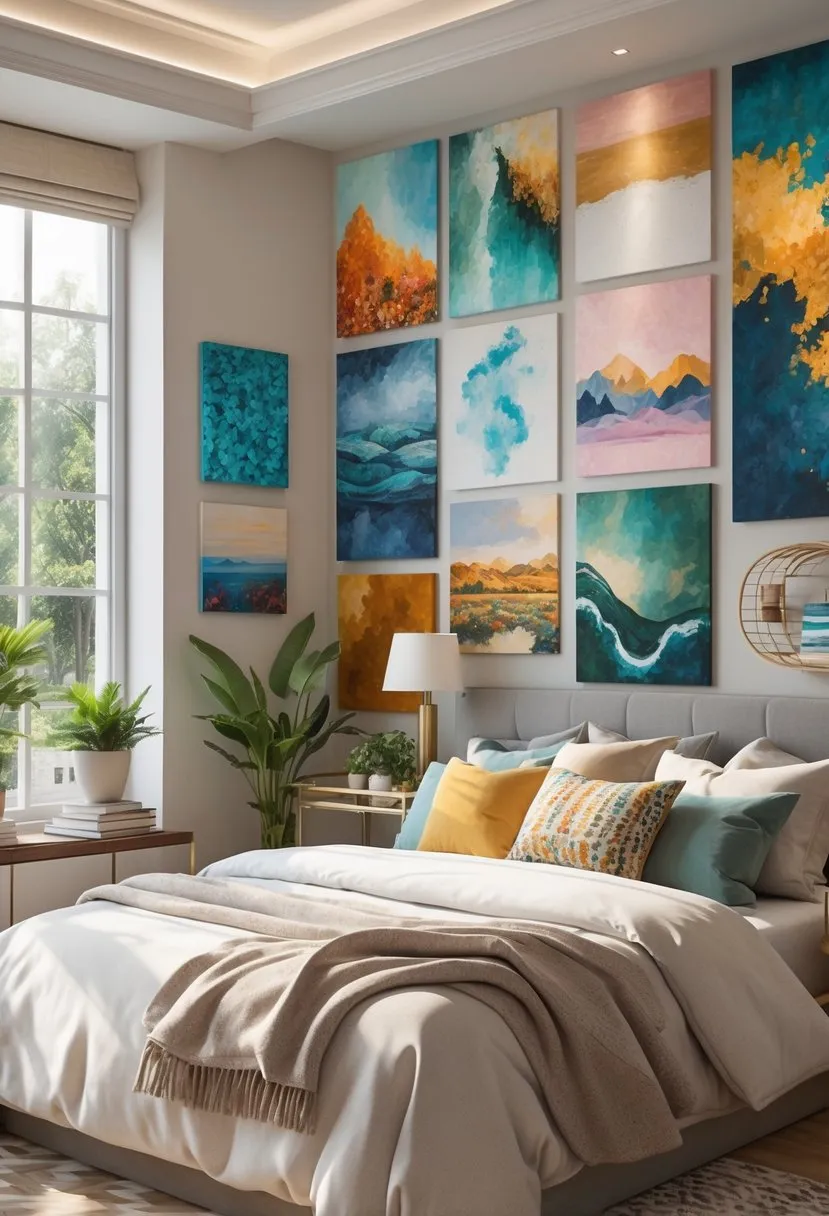
I want to share ideas that can help you change the look of your bedroom walls in a unique way. Painting your bedroom walls gives you a chance to add personality and style to your space without much effort. It’s a simple way to make your room feel fresh and different.
Choosing the right wall painting ideas can transform your bedroom and reflect who you are. Whether you like bold colors or soft tones, there are many creative ways to make your walls stand out. I will guide you through 15 unique ideas that can inspire your next painting project.
The right colors and techniques help create a calming, stylish atmosphere that reflects your personality.
1) Geometric Shapes Accent Wall

I find geometric shapes to be a simple way to add style to a bedroom wall. Triangles, hexagons, and diamonds work well together in different patterns. You can paint these shapes in bold or neutral colors depending on your taste.
Using plywood or just paint, I think a geometric wall becomes a strong, modern focal point. It changes the feel of the room without needing extra decor. You can keep it simple or make it more detailed based on your skill and tools.
2) Ombre Gradient Paint
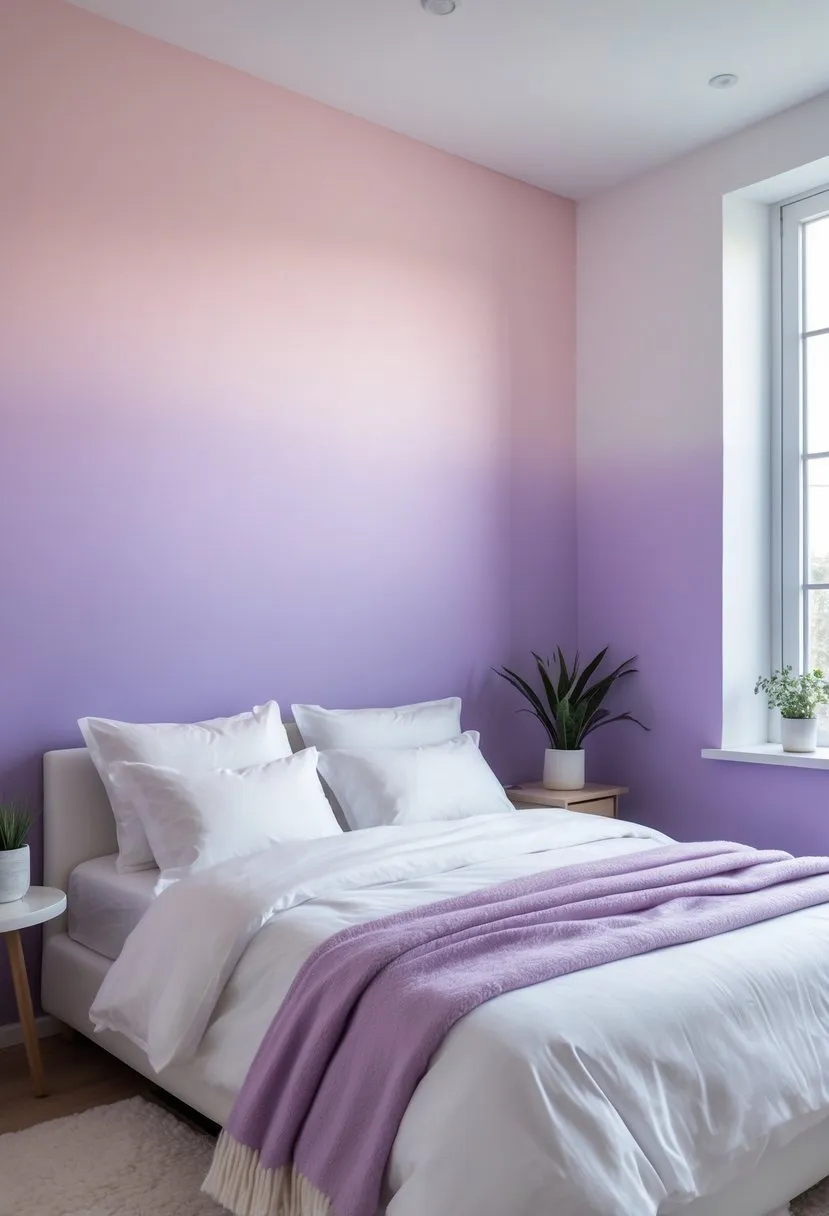
I like using ombre gradient paint to add depth to a bedroom wall. This technique blends colors smoothly from light to dark, creating a soft transition that feels calm and stylish.
You can pick colors that match your room’s theme. I have seen ombre walls with blues fading into coral or creams shifting to warm tones.
The effect is subtle but makes a big difference. It is a simple way to turn a plain wall into a unique focal point without being too bold.
3) Textured Brushstroke Patterns
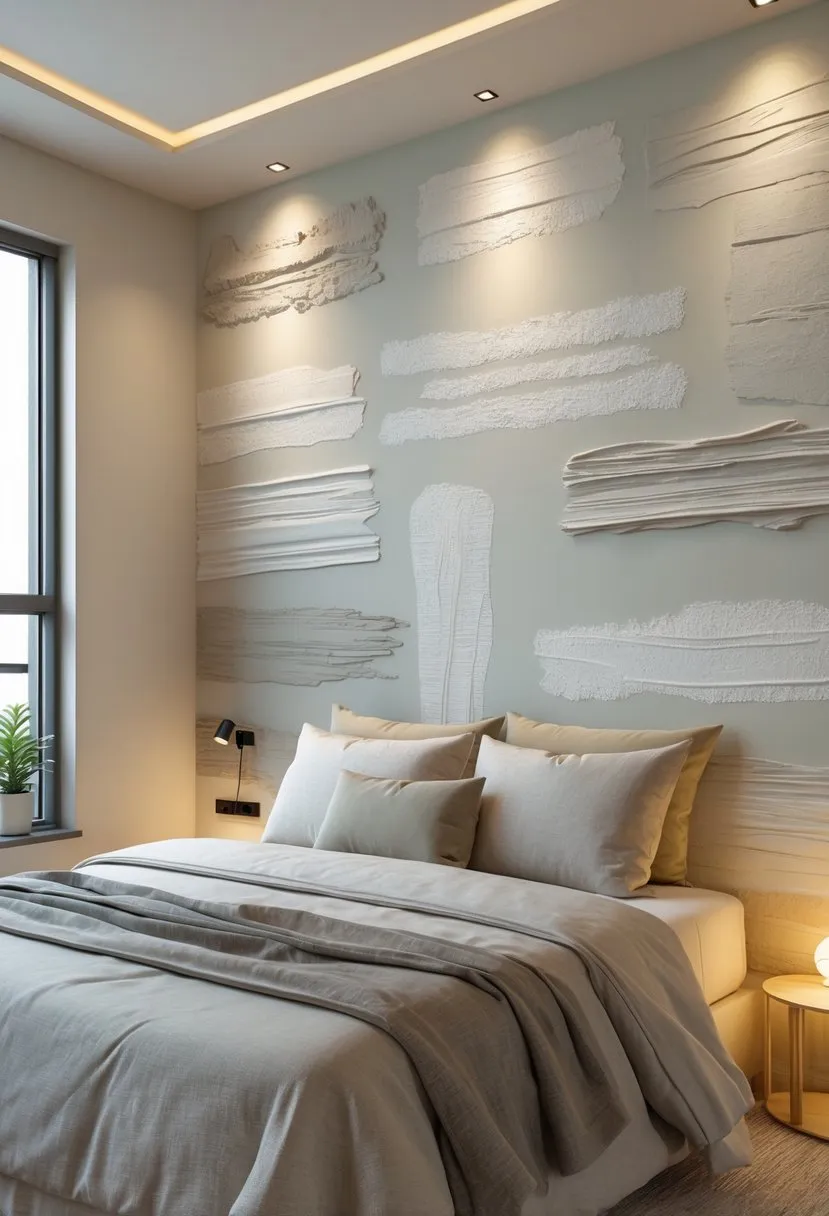
I like using textured brushstroke patterns because they add depth to bedroom walls. These patterns create a unique look that simple flat paint can’t achieve. You can try different brush sizes and directions to make interesting effects.
Applying paint in layers with visible strokes gives the wall a hands-on, artistic feel. It’s easy to customize, whether you want a bold or subtle texture. This style works well with neutral or bright colors, depending on your room’s mood.
4) Metallic Accent Stripes
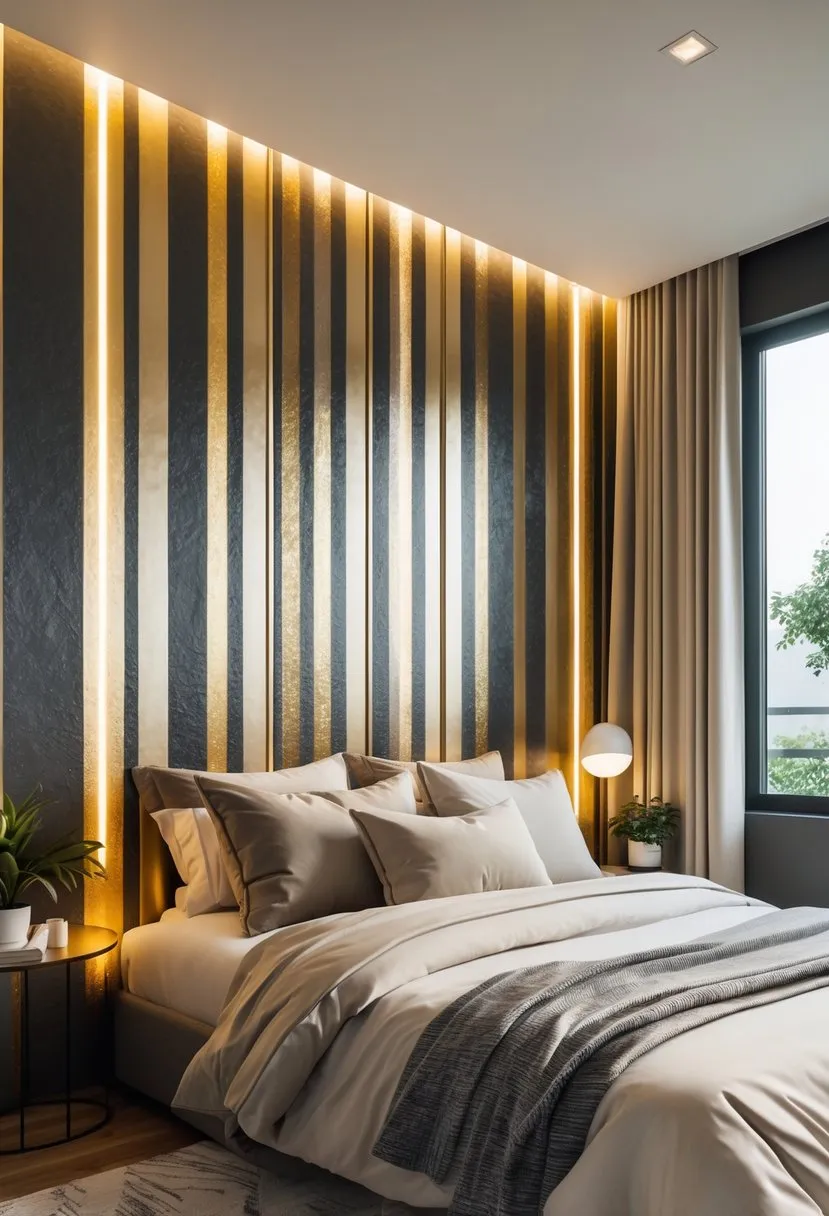
I like using metallic accent stripes to add a modern touch to a bedroom wall. These stripes catch the light and create a subtle shine that changes throughout the day.
Choosing gold, silver, or bronze tones works well with neutral colors in the room. I often pair them with simple furniture to keep the look balanced.
Metallic stripes can be bold or thin. Either way, they add depth and interest without overwhelming the space. This technique blends style with simplicity.
5) Nature-Inspired Murals
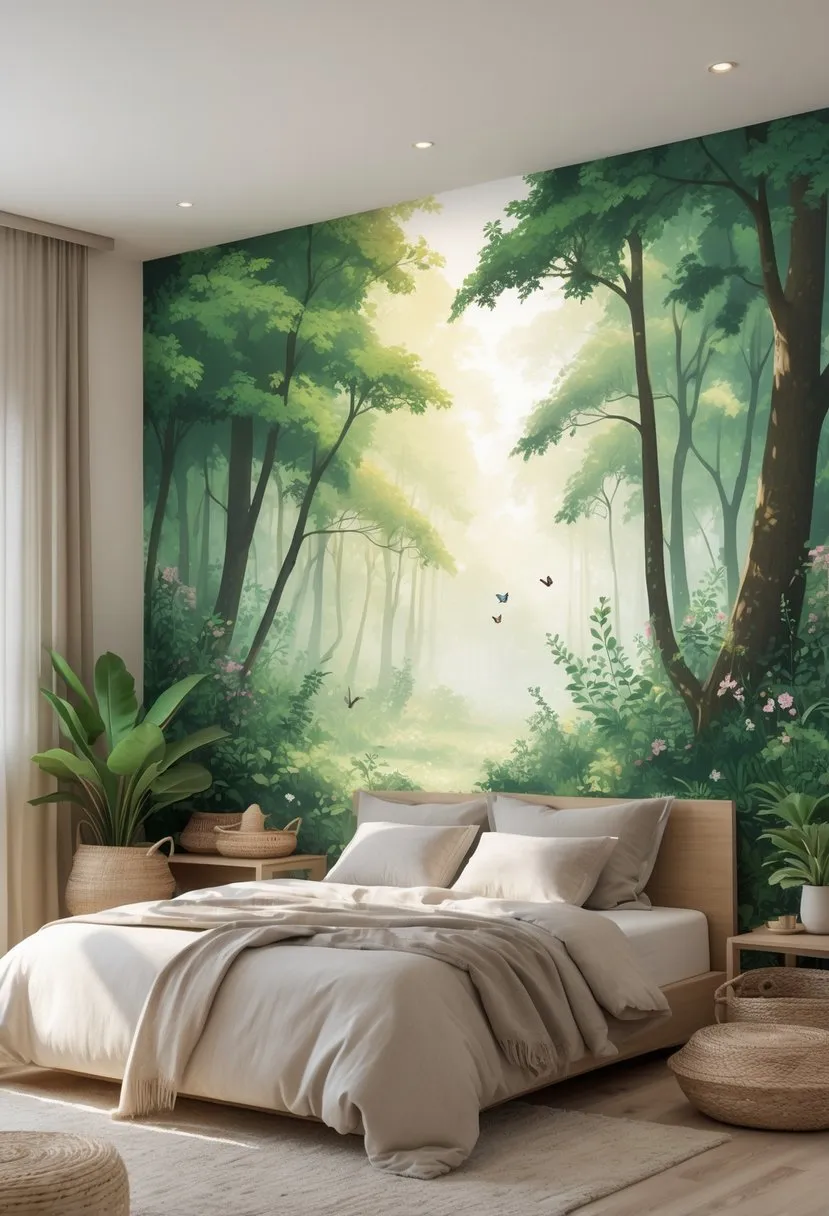
I find nature-inspired murals bring a calming feel to any bedroom. Scenes like forests, mountains, or soft skies add depth and a peaceful vibe.
Using natural colors like greens, browns, and blues creates a cozy and warm atmosphere. These murals cover large wall areas, making a strong focal point that changes the room’s mood.
Adding rustic touches, like wood paneling, can enhance the natural look. I think this style helps connect indoor space with the outdoors in a simple, stylish way.
6) Abstract Color Block Design
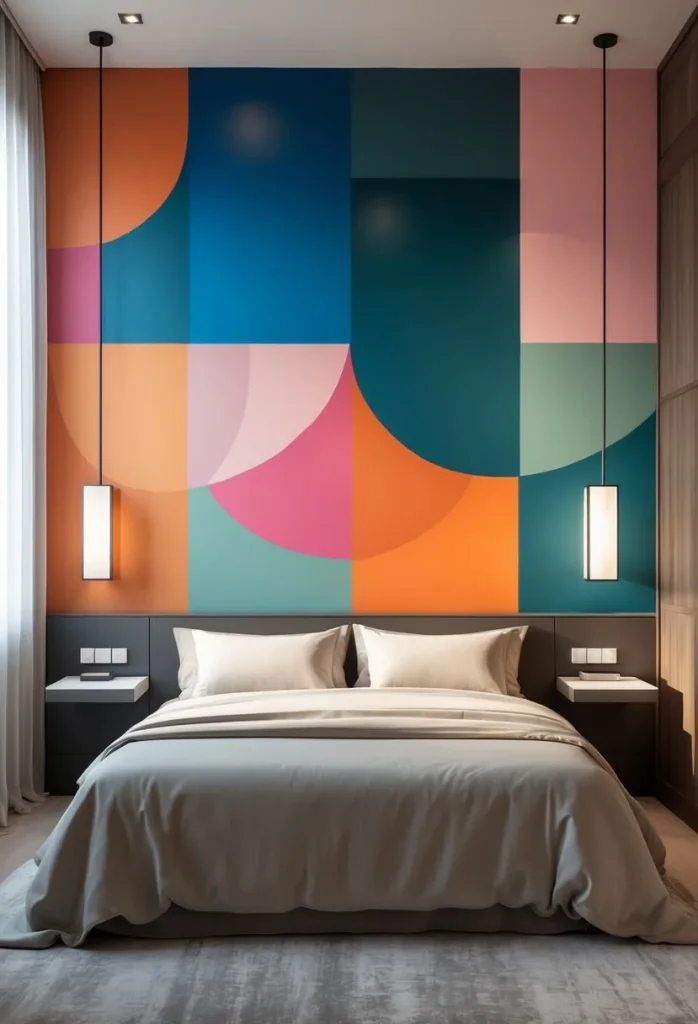
I like using abstract color block designs to add a bold look to a bedroom. This style divides the wall into large sections, each painted a different color. It gives a modern, artistic feel without being too busy.
You can pick colors that match or contrast for different effects. For example, soft pink and terracotta create warmth, while black and white feel sharp and clean. I find this design both simple and eye-catching.
7) Chalkboard Paint Feature Wall
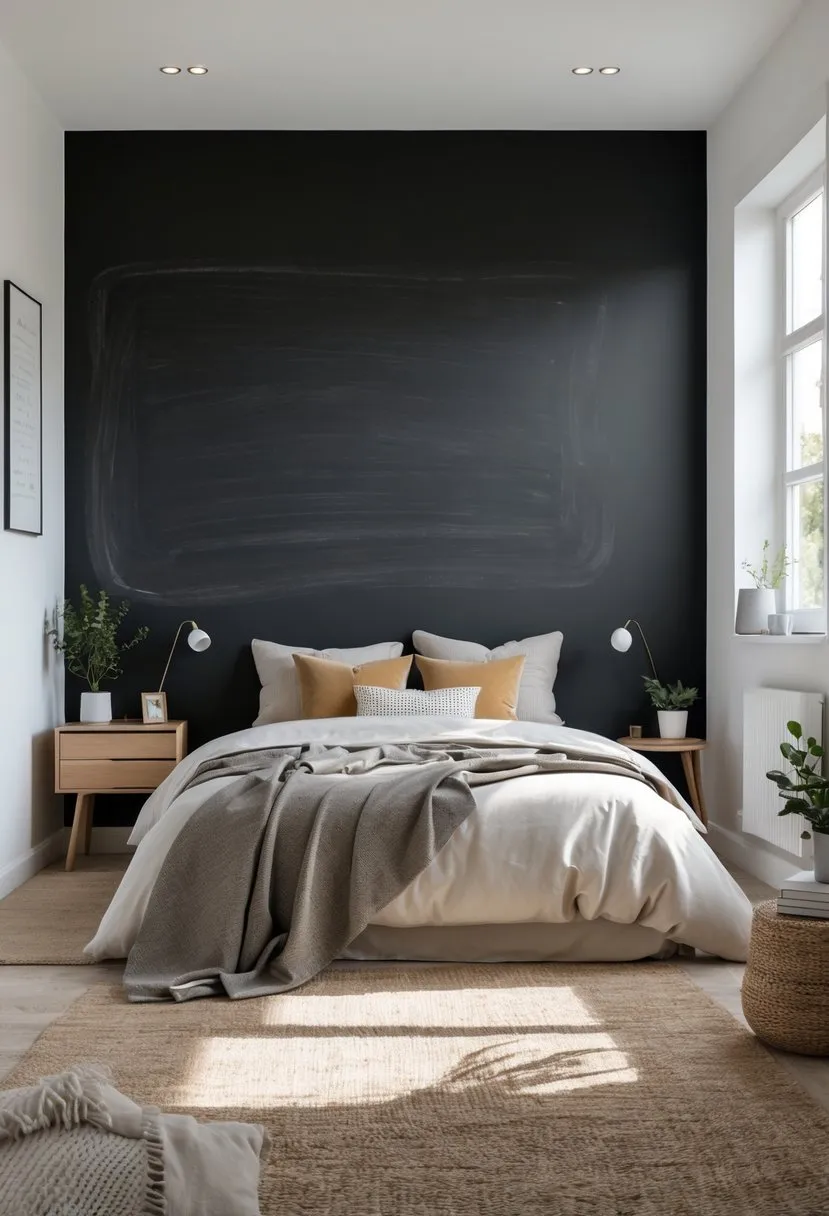
I like using chalkboard paint for a bedroom wall because it adds both style and function. It turns the wall into a place to write reminders, draw, or change the look whenever I want.
This type of wall works well as a creative spot or a place to plan out ideas. You can choose any color of chalkboard paint to fit your room’s design.
For me, the coolest part is how flexible it is. The wall can be bold or subtle, depending on how I use it.
8) Distressed Rustic Finish

I like using a distressed rustic finish because it adds real texture to the bedroom walls. This look mimics weathered wood or old paint, giving the room a warm, lived-in feel.
To create this, I use simple techniques like dry brushing or sponging. These methods help create an aged effect without needing special tools. The result feels natural and inviting.
This style works well in bedrooms where you want a cozy, relaxed atmosphere. It adds character without overwhelming the space.
9) Vertical Color Banding
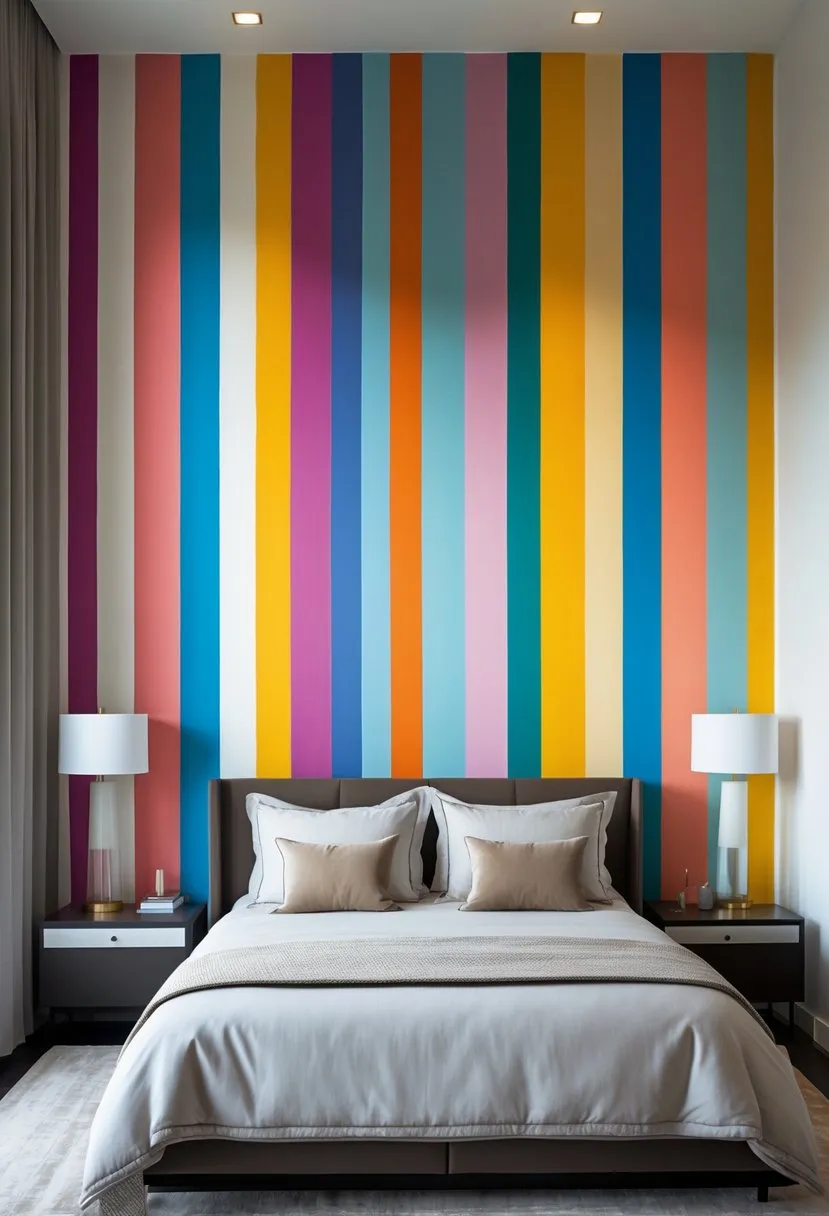
I like vertical color banding because it adds height to a bedroom. Painting wide vertical stripes in different colors creates a clean, modern look.
You can use bold or soft colors depending on your style. The bands can be equal or vary in width to keep things interesting.
This technique is simple but effective. It refreshes the space without cluttering it and works well on all walls or just one accent wall.
10) Trompe-l’œil Illusions
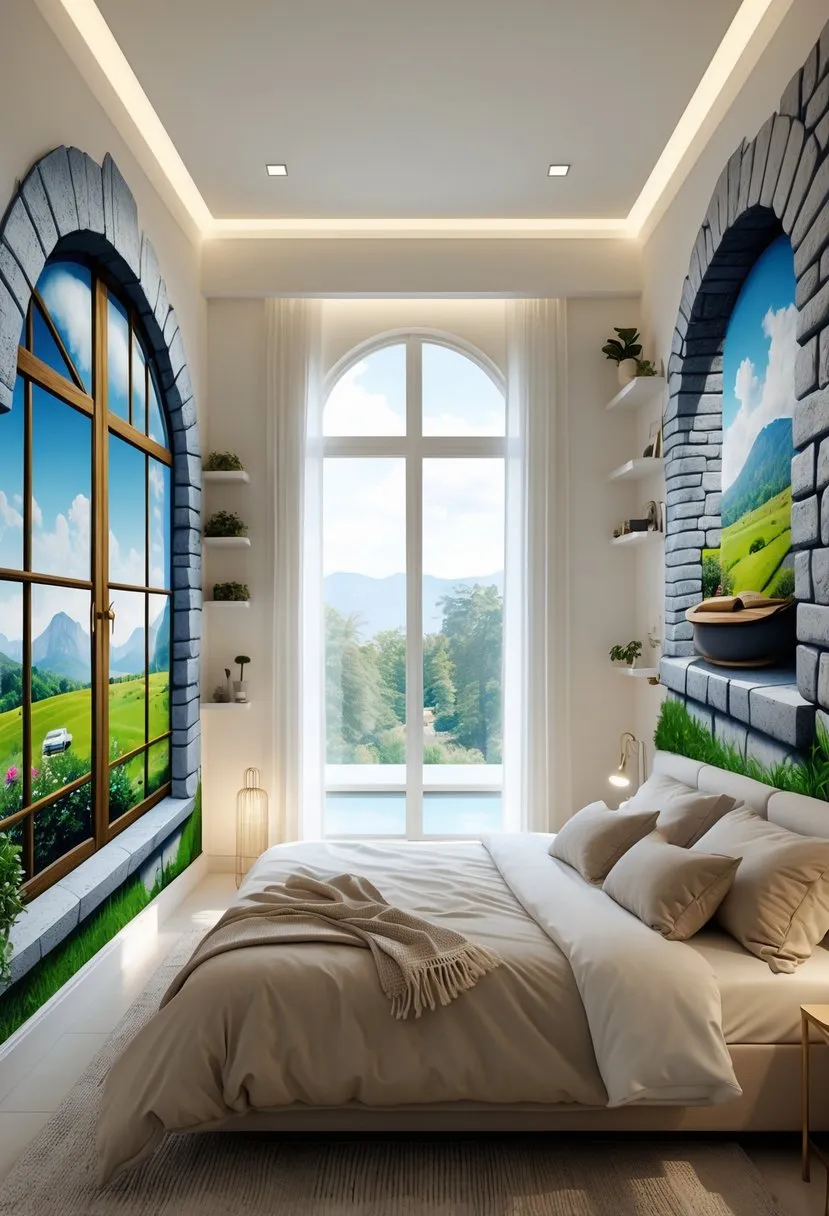
I find trompe-l’œil illusions fascinating because they create a sense of depth on flat walls. This technique uses detailed painting to trick the eye into seeing real objects or scenes.
In a bedroom, a faux window or architectural detail can open up a space. It adds interest without taking up room. I like how it brings a quiet, imaginative feel to the room.
11) Soft Pastel Clouds
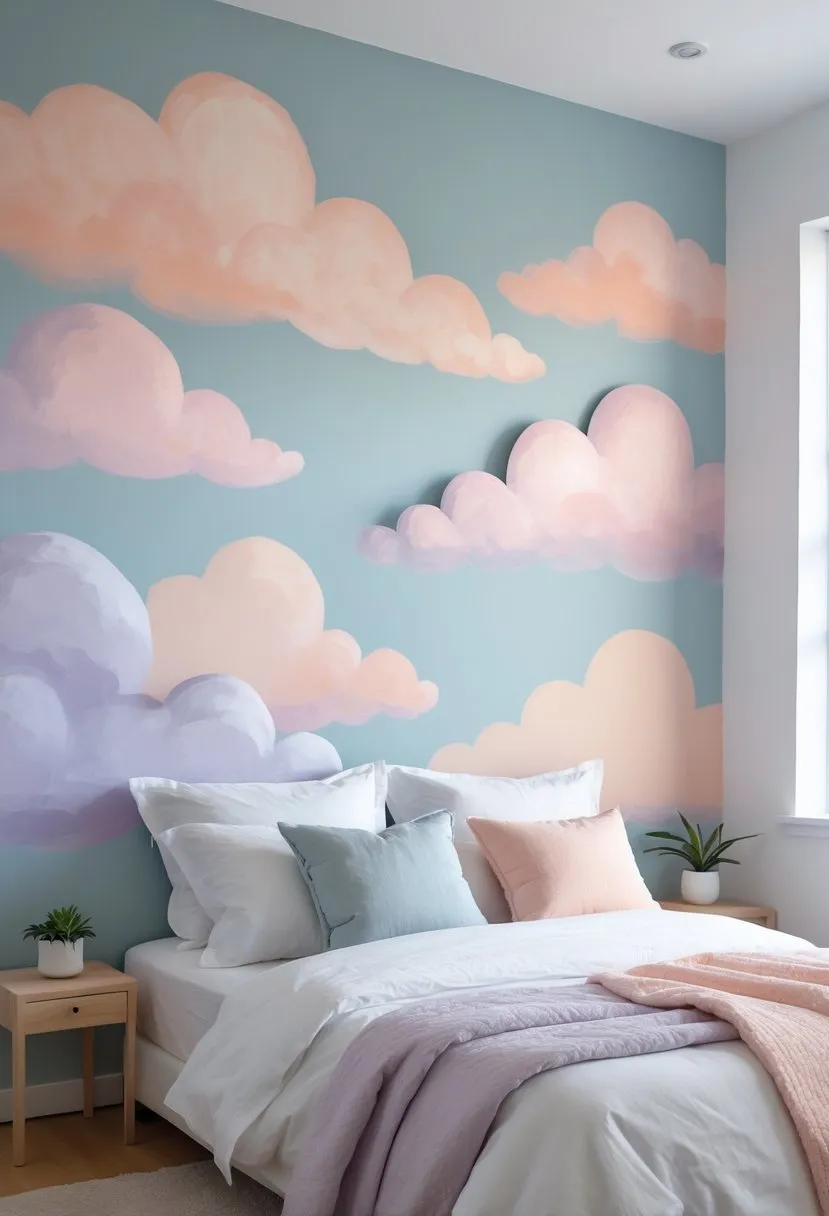
I find soft pastel clouds to be a calm and inviting wall painting idea. Using light blues, pinks, and lavenders, you can create a peaceful atmosphere in your bedroom.
Painting clouds with soft, gentle shapes adds a dreamy feeling without overwhelming the space. It works well for any room size and style.
I like this idea because it brings a natural, airy look inside. It also pairs nicely with light furnishings and simple decor, making the room feel open and fresh.
12) Bold Contrast Frames
I like using bold contrast frames to add a strong visual impact to bedroom walls. These frames create a clear separation between colors, making the space feel more dynamic.
Choosing dark frames against a light wall or bright frames on a neutral background draws attention. It works well with modern or even classic bedroom styles.
Bold contrast frames also help highlight artwork or photos, turning simple walls into eye-catching displays. This idea can change the mood of the room with just a small detail.
13) Hand-Painted Botanical Elements
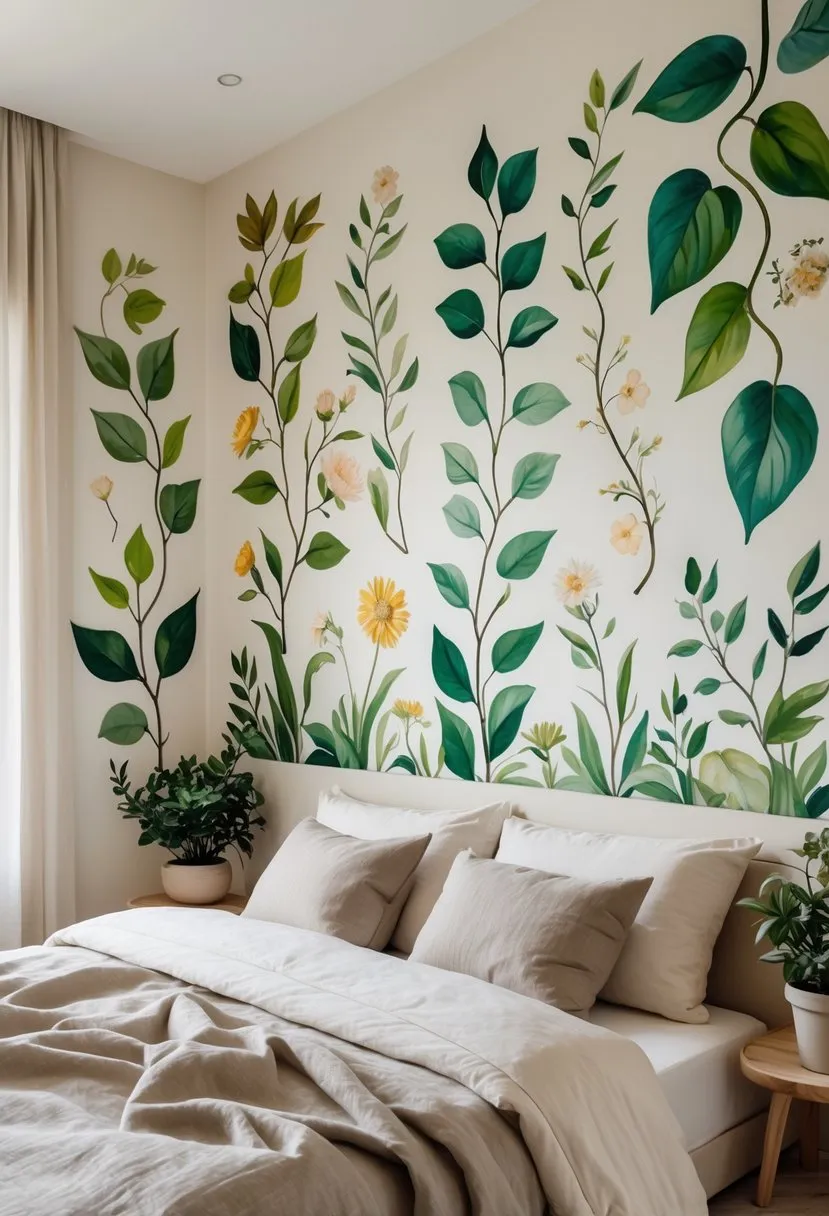
I like using hand-painted botanical designs on bedroom walls. These add a natural feel without needing real plants. The details in leaves and flowers bring depth and texture to the room.
Painting these elements by hand lets me choose colors and styles that fit my space. It feels personal and unique compared to prints or wallpapers. This kind of art creates a calm and fresh atmosphere, perfect for a bedroom.
14) Subtle Metallic Wash
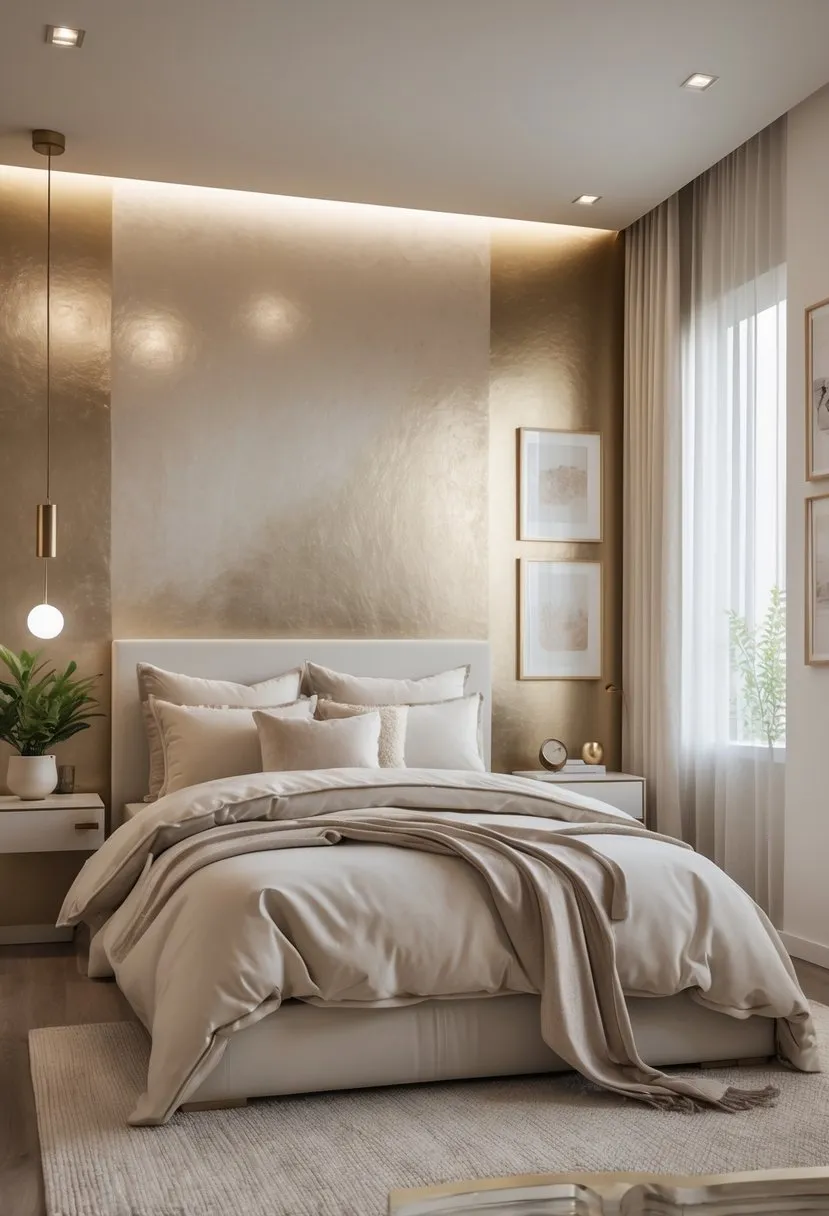
I like using a subtle metallic wash because it adds a soft glow without being too flashy. The light reflects gently, giving the room a calm and elegant feel.
This technique works well on all wall types and colors. It’s a simple way to make your bedroom look more refined while keeping things low-key.
You can choose from silver, gold, or bronze tones. Each adds a different mood but stays understated, perfect for a unique, sophisticated look.
15) Two-Tone Diagonal Split
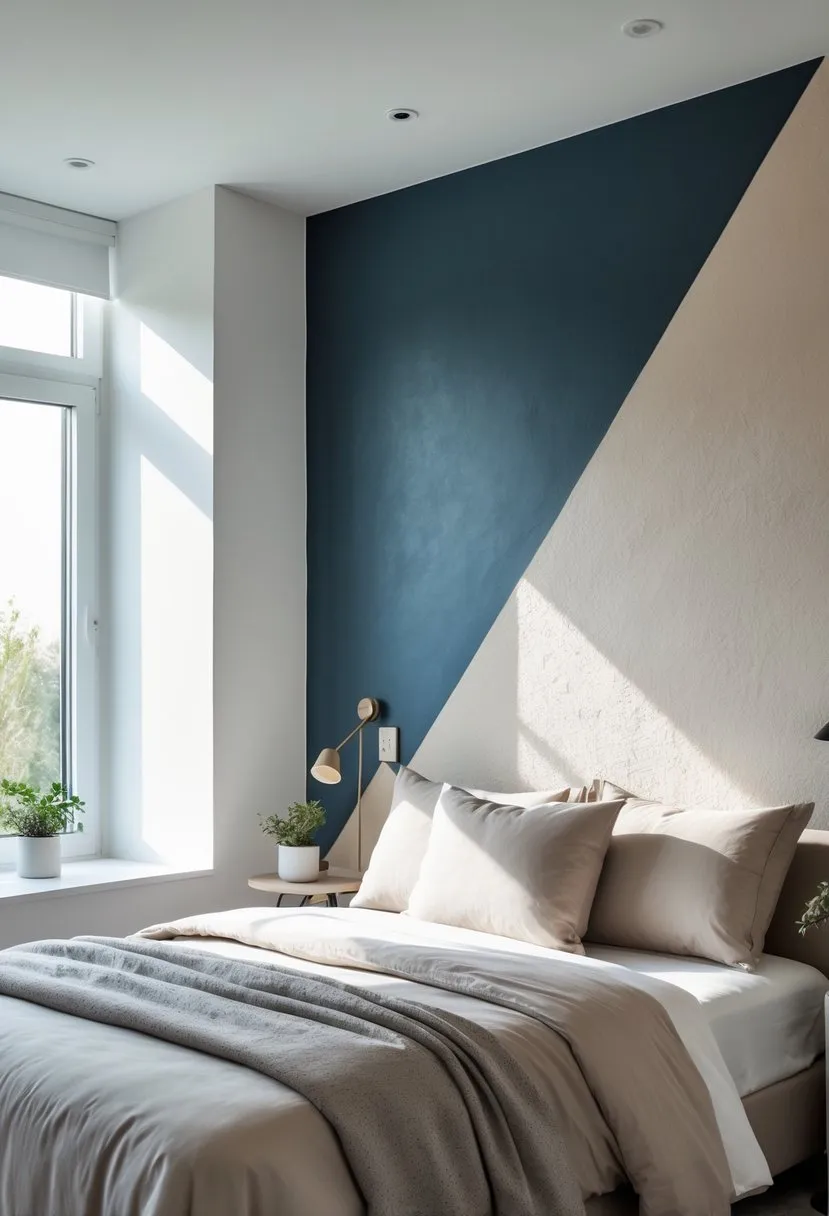
I find the two-tone diagonal split to be a fresh way to add movement to a bedroom wall. Instead of the usual horizontal or vertical lines, the diagonal cut creates a dynamic look.
This style works well with contrasting colors or different shades of the same color. It can make the room feel more modern and lively without being overwhelming.
I like how the diagonal line guides the eye across the wall. It adds interest and depth while keeping the design simple and clean.
How to Choose the Right Wall Painting Ideas for Your Bedroom
Picking the right wall painting idea means looking closely at your bedroom’s current style, the feelings you want to create, and how the new design fits with the rest of the room. It’s about combining personal taste with smart choices in color and design.
Assessing Your Bedroom’s Style
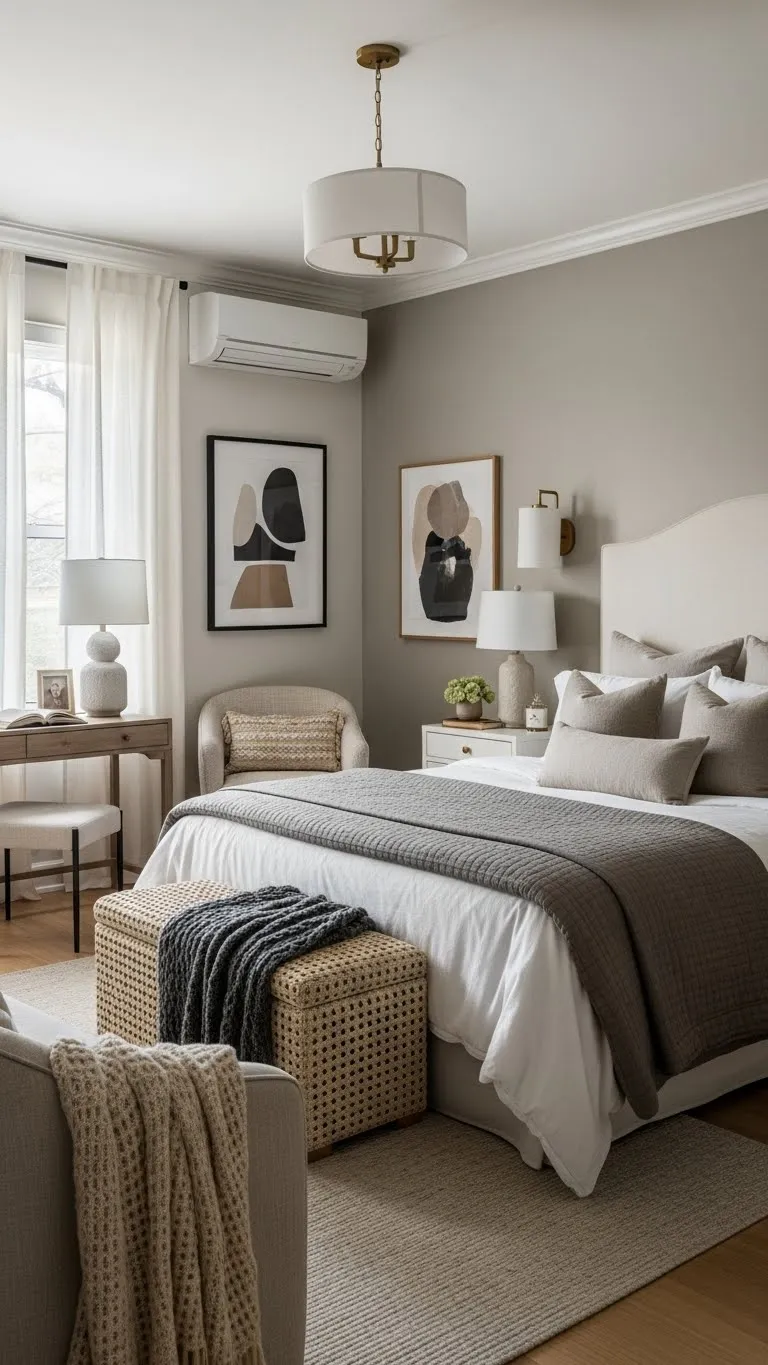
I always start by understanding the style of my bedroom. Is it modern, cozy, rustic, or minimalist? Knowing this helps me pick paint patterns and colors that fit well. For example, a modern room might look best with clean lines and neutral colors, while a boho style can handle bolder patterns or earthy tones.
I also check the furniture and decor already in the space. I want the wall paint to add to the look, not clash. If I have a lot of bright furniture, a softer wall color works better. When the room has simple furniture, painting a bold accent wall creates a nice contrast.
Considering Color Theory and Mood
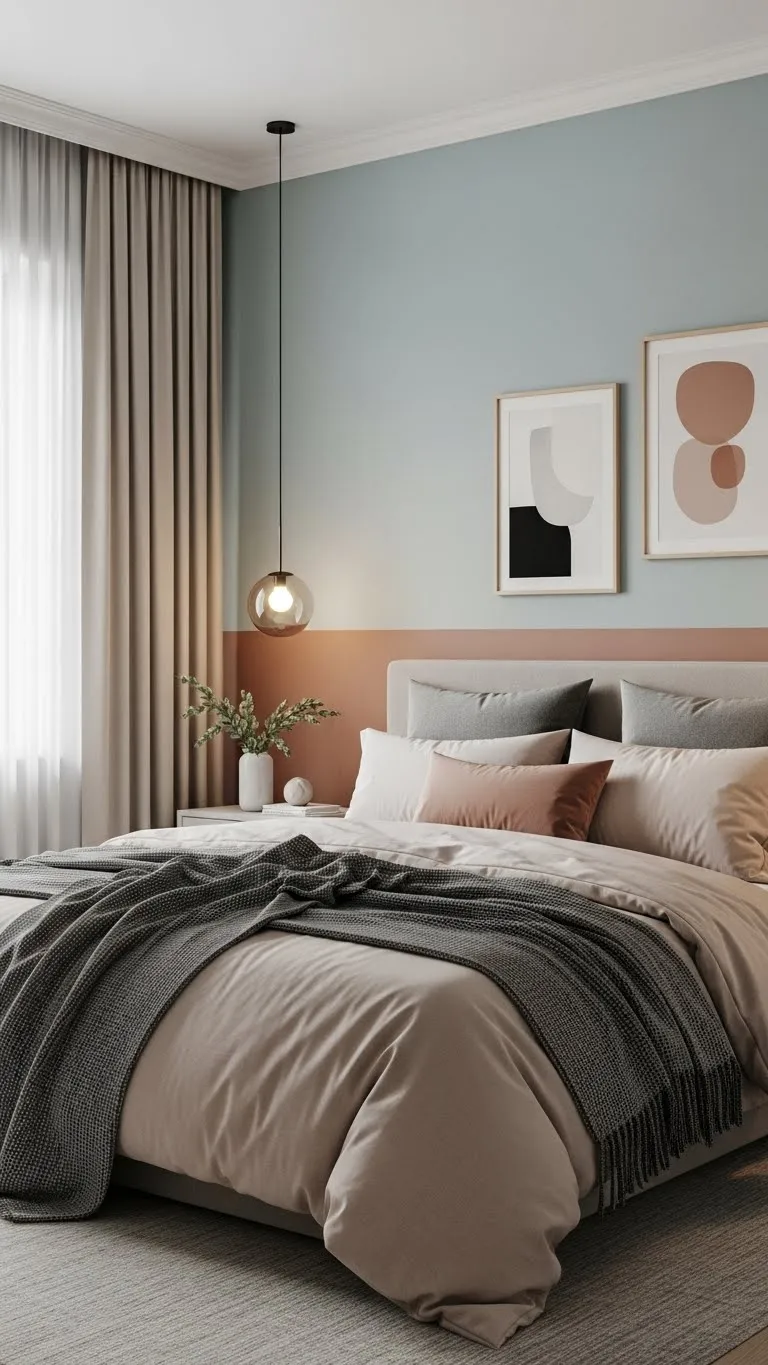
Color affects how I feel in a room. I think about whether I want my bedroom to feel calm, energetic, or cozy. Cool colors like blue and green bring relaxation, while warm colors like red or orange can increase energy but might feel too intense in a bedroom.
I keep in mind light too. Dark colors can make a room feel smaller, so I use them on one wall or as accents. Lighter colors can open up the space. Using complementary or contrasting colors adds interest but needs balance. I use a color wheel or simple charts to pick shades that work well together.
Balancing Uniqueness with Cohesion
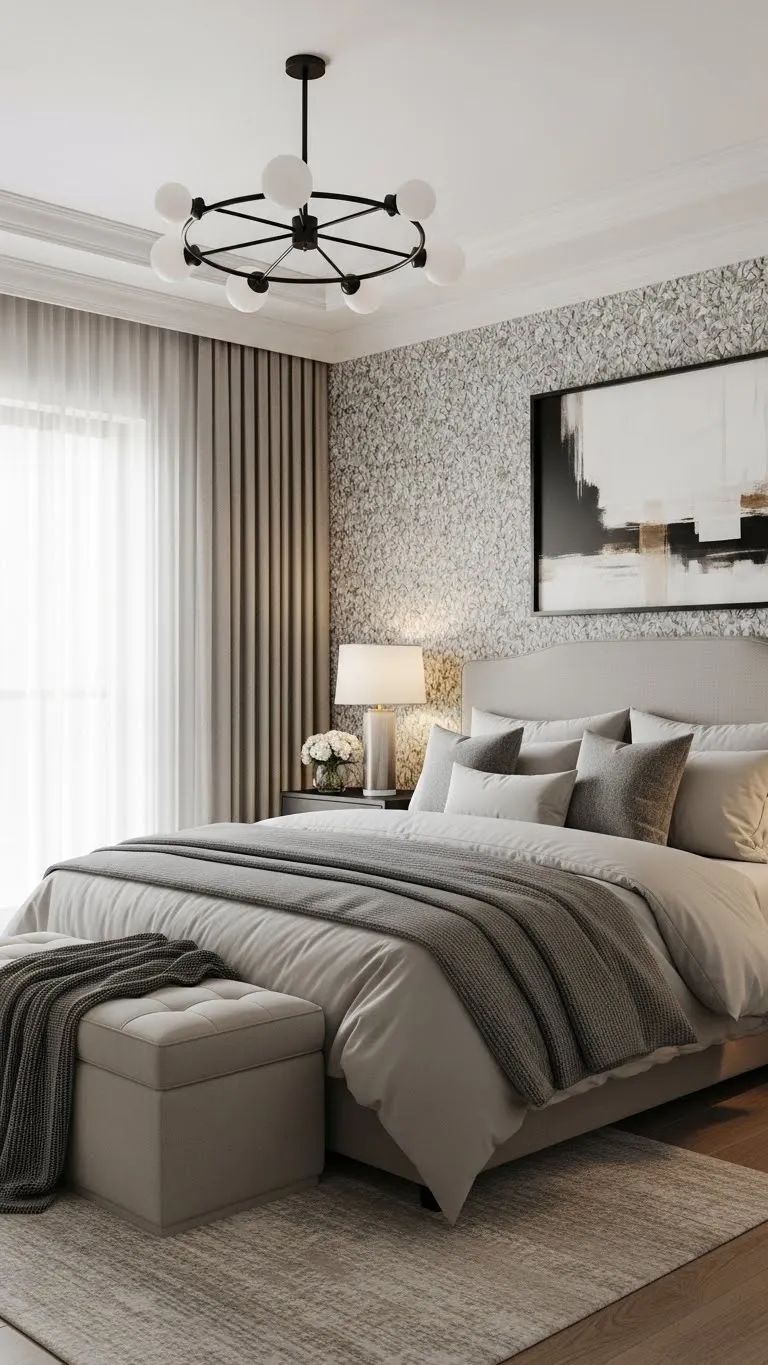
I want my bedroom to feel personal, but it also needs to look put together. Unique designs, like stencils, patterns, or textured paint, stand out but must match the room’s overall theme to avoid chaos.
I balance this by choosing one focal wall or section for bold designs. The rest of the walls get simpler colors or finishes. This keeps the space interesting without being overwhelming. I also make sure the new paint style blends with my bedding, curtains, and flooring, so everything feels connected.
Practical Tips for Preparing Bedroom Walls
Preparing your bedroom walls correctly sets the foundation for a smooth painting process and a lasting finish. It means cleaning, repairing, and smoothing the surface before you start painting. Having the right tools and materials on hand makes this preparation easier and more efficient.
Essential Prep Steps
First, I inspect the walls for any cracks, holes, or peeling paint. Small holes and cracks need filling with spackling compound or wall filler. After applying the filler, I let it dry completely, then sand it down until it’s smooth and flush with the wall. This step is important because uneven surfaces will show once painted.
Next, I clean the walls to remove dust, dirt, and grease. I use a mild detergent mixed with water and a sponge. This cleaning helps the paint stick better. Finally, I apply painter’s tape to trim and edges to protect areas I don’t want painted.
Recommended Tools and Materials
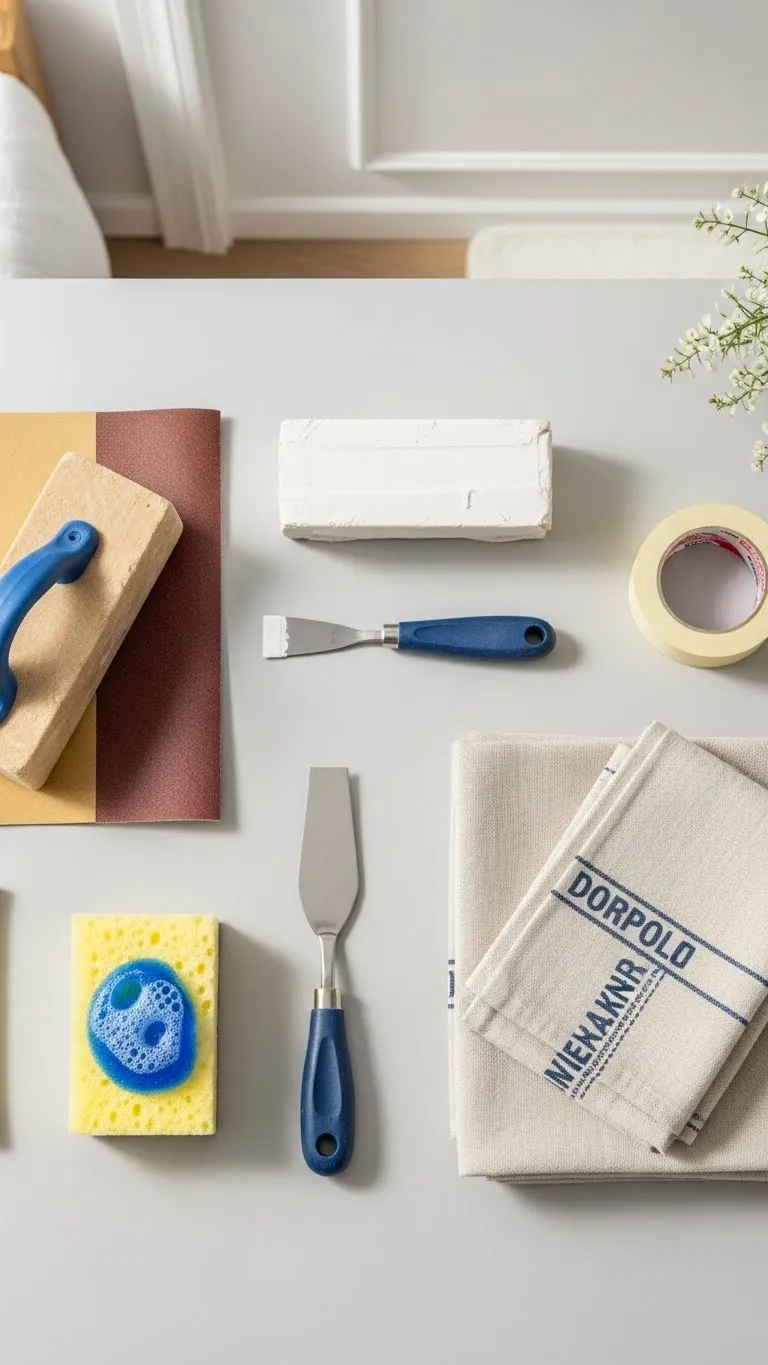
Having the right tools saves time and improves results. I always keep these handy:
- Sandpaper or sanding block for smoothing patched areas
- Spackling compound or wall filler to repair holes and cracks
- Putty knife to apply filler evenly
- Mild detergent and sponge to clean walls
- Painter’s tape for clean edges and protecting trim
- Drop cloths to cover floors and furniture
Using good quality materials like primer, when needed, also helps the final paint layer last longer and look better. Having everything ready before painting starts makes the whole process run smoothly.