Victorian Christmas Traditions 25 Timeless Customs to Remember

Victorian Christmas refers to the way Christmas was celebrated during the 19th century in Britain, a period that shaped many of the holiday traditions still common today. This era saw Christmas grow from a simple, quiet occasion into a widely loved family festival.
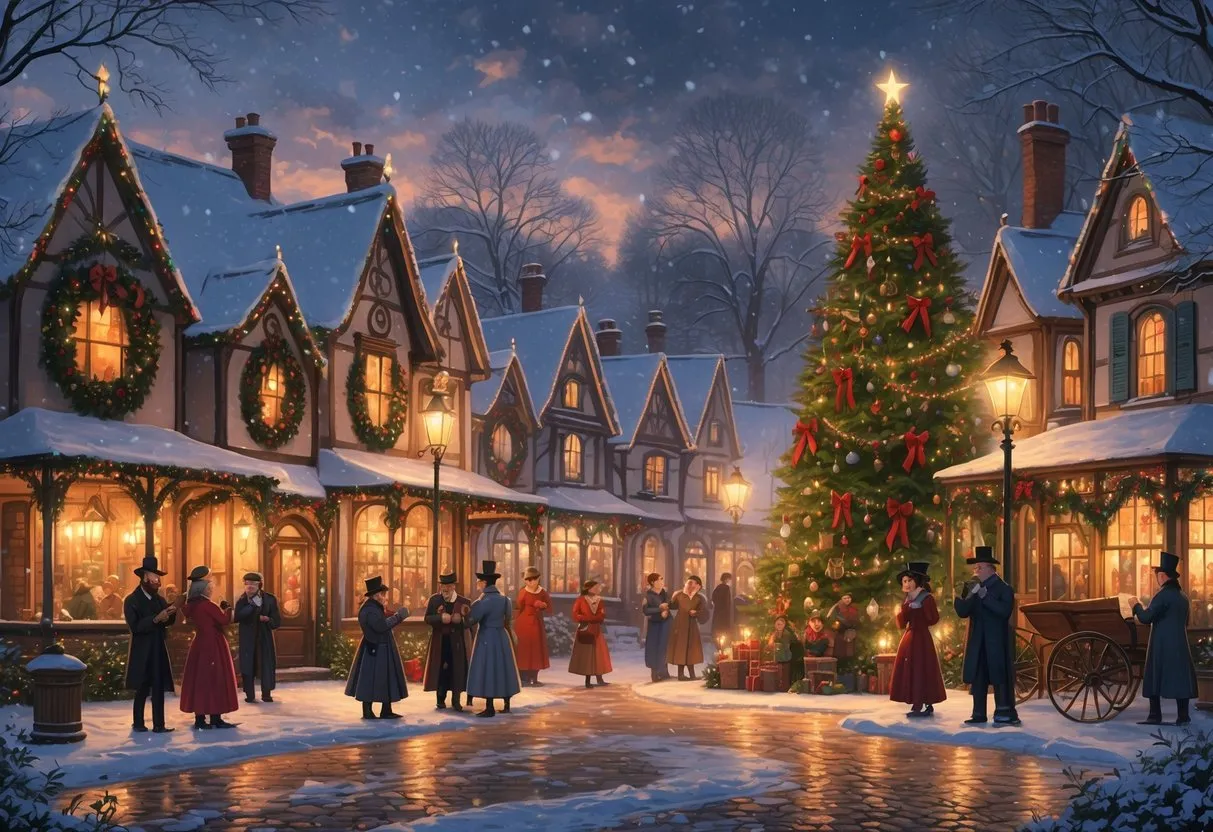
The significance of a Victorian Christmas lies in how it laid the groundwork for modern Christmas customs. The influence of key figures and social changes during this time helped create new ways to enjoy the holiday season, focusing more on family, gift-giving, and festive decorations.
1) The popularisation of Christmas trees by Prince Albert
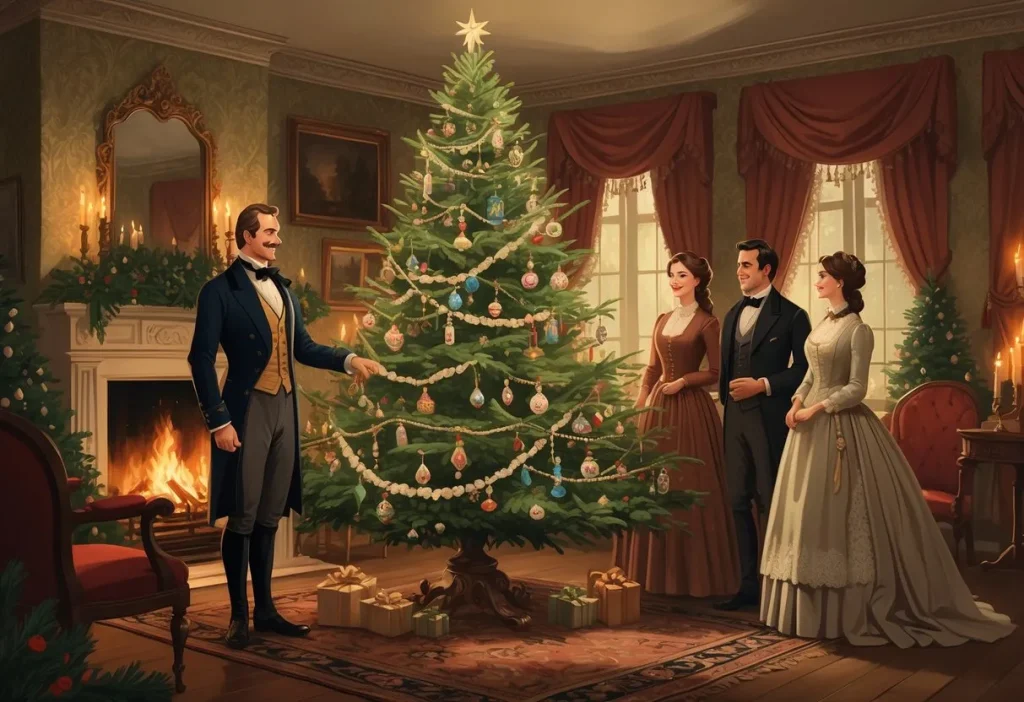
Prince Albert, Queen Victoria’s husband, helped make Christmas trees popular in Britain. He brought the tradition from Germany when they married.
In 1848, a drawing showed the royal family decorating a Christmas tree. This image appeared in a widely read newspaper.
The public liked this new tradition and started to copy it. Over time, Christmas trees became a key part of British celebrations.
2) Introduction of Christmas cards as a Victorian tradition
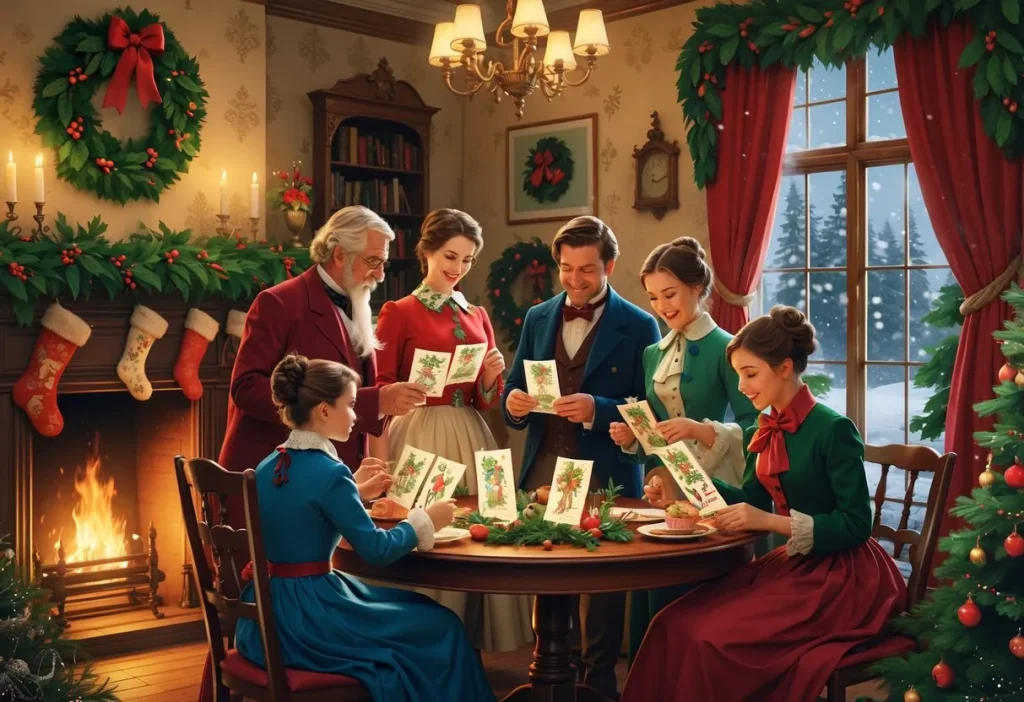
Christmas cards became popular during the Victorian era. They started as a way for people to send holiday greetings to family and friends.
The introduction of new printing techniques helped make cards colorful and affordable. The halfpenny postage stamp, introduced in 1870, also made sending cards easier.
Victorian cards often combined words with pictures. Some designs were simple, while others had unusual or strange images. This helped shape the Christmas card tradition still seen today.
3) Christmas crackers invented during Victorian times
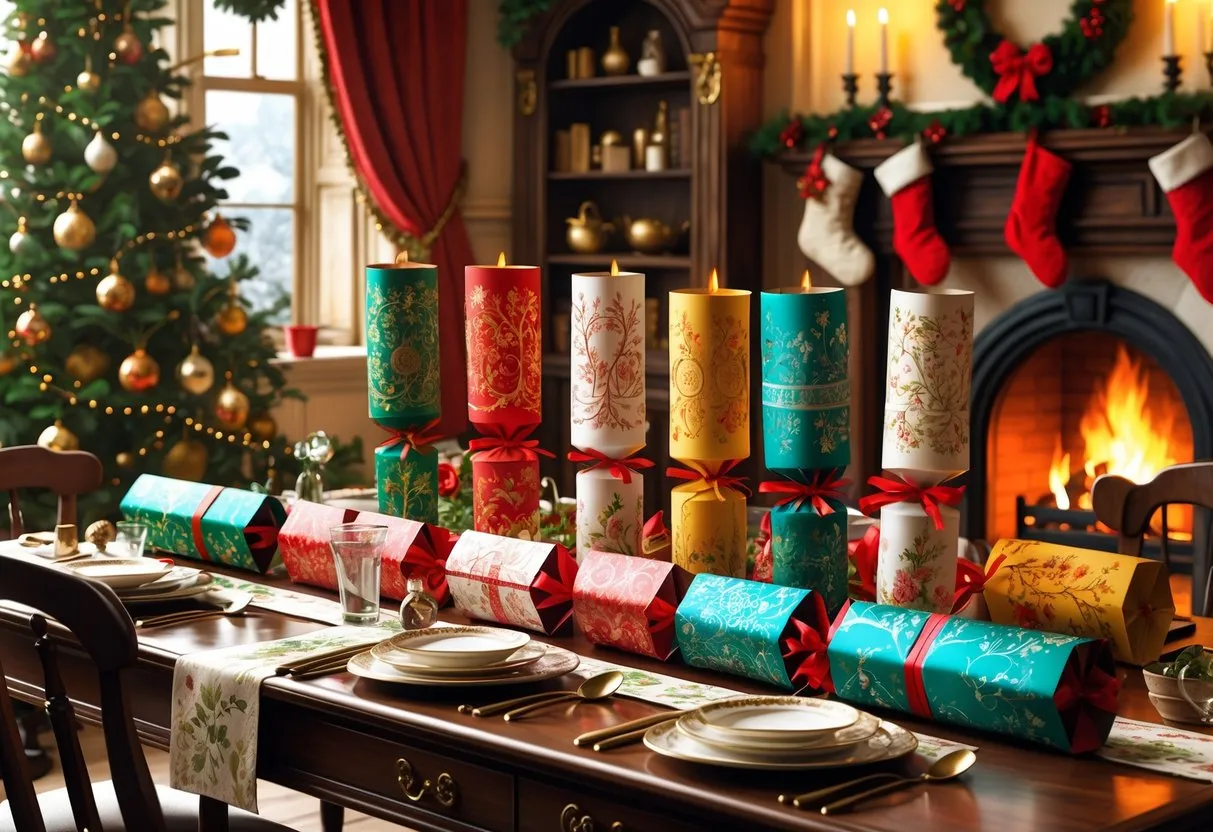
Christmas crackers were created in the Victorian era by Tom Smith, a London confectioner. In 1847, he was inspired by French bonbons wrapped in paper twists.
Smith improved the idea by adding a small motto inside and later replacing sweets with gifts. This invention became a popular British Christmas tradition.
The Christmas cracker grew more elaborate during this time, shaping the version still used in celebrations today.
4) Charles Dickens’ influence through ‘A Christmas Carol’
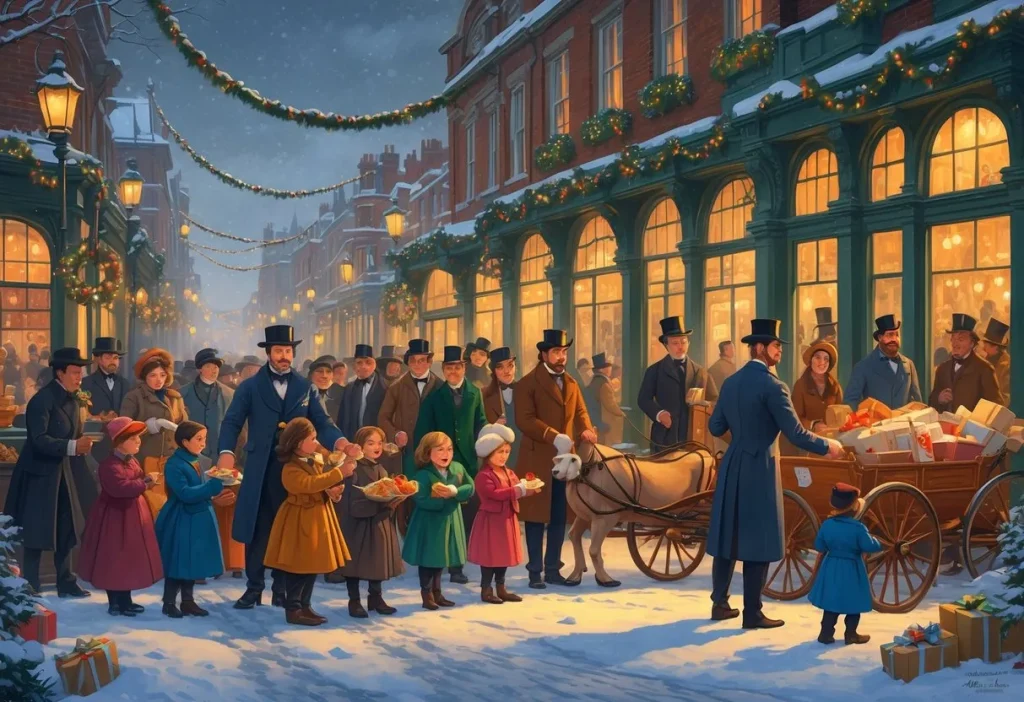
Charles Dickens published A Christmas Carol in 1843 during a time when Christmas traditions were fading. His story helped bring kindness, charity, and family importance back to the holiday.
The novella encouraged people to celebrate Christmas with generosity and compassion.
Dickens also revived older customs like caroling and feasting, making Christmas more meaningful for many.
5) Shift of Christmas focus to family and children
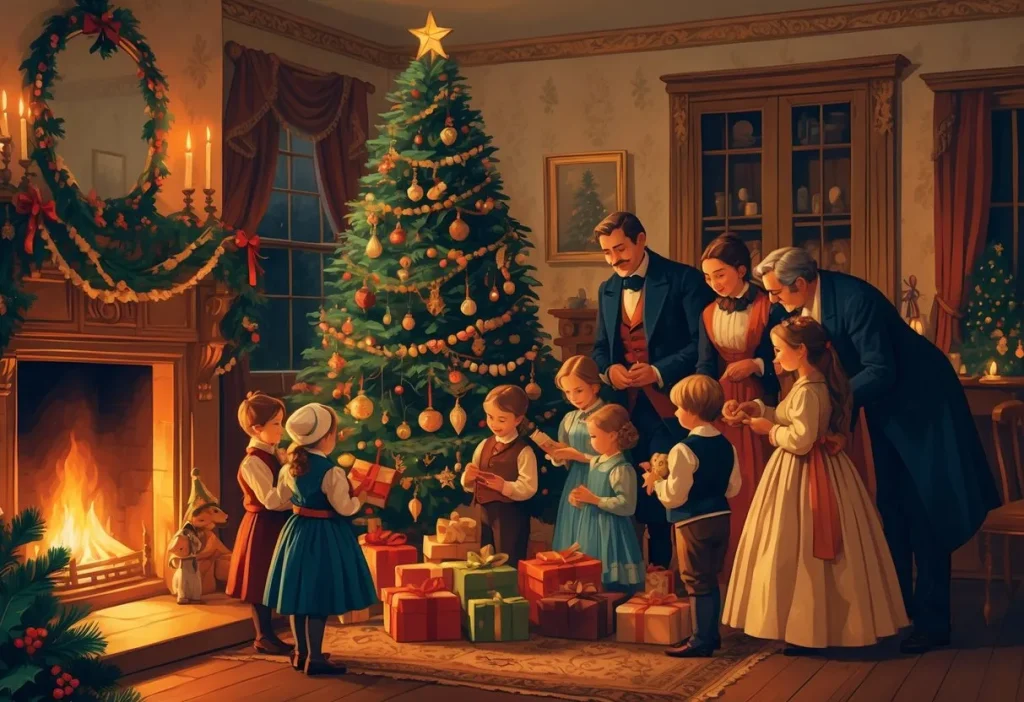
During the Victorian era, Christmas changed from an adult-centered celebration to one focused on family and children. Childhood became more recognized as a special stage of life.
Father Christmas evolved into a figure who brought gifts to children, adding a magical side to the holiday.
The small nuclear family—father, mother, and children—became the heart of Christmas celebrations. This shift helped shape modern Christmas traditions.
6) Rise of Father Christmas as gift-bringer
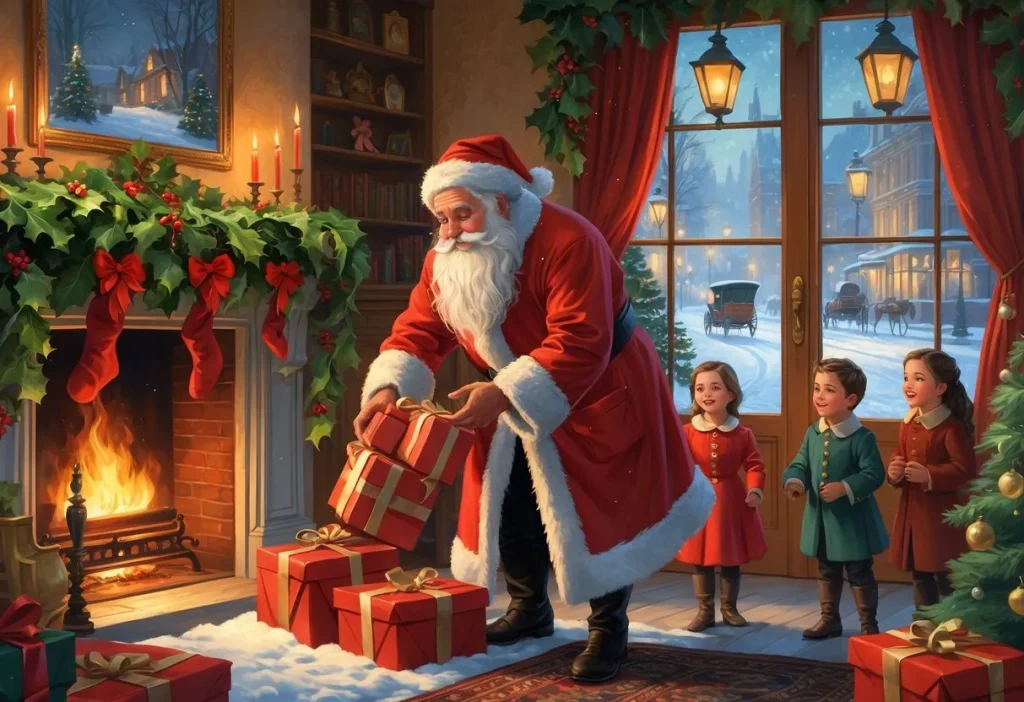
During the Victorian era, Father Christmas changed from a symbol of festivity to a gift-giver. Christmas became more focused on children and family.
Father Christmas started to share traits with Santa Claus, who was known for bringing presents. By the late 19th century, the two figures blended in England.
He became linked to new traditions like stockings, chimneys, and flying reindeer. This marked a big shift in how Christmas was celebrated.
7) Eating turkey became a festive custom
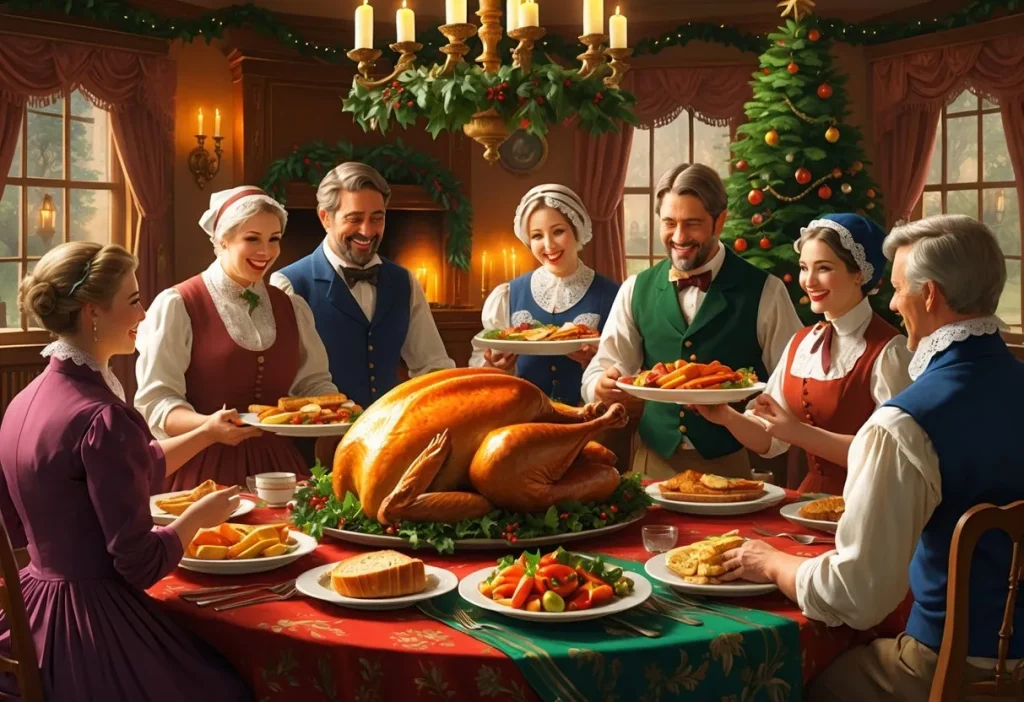
Turkey was not always the main dish for Christmas. Before the Victorian era, people ate a variety of meats like goose or beef.
In Victorian times, turkey grew more popular. It became easier to get and was seen as special for celebrations.
Charles Dickens helped make turkey a symbol of Christmas by writing about it in his famous story, A Christmas Carol. Many families began to follow this tradition.
8) Decorating homes with holly and ivy
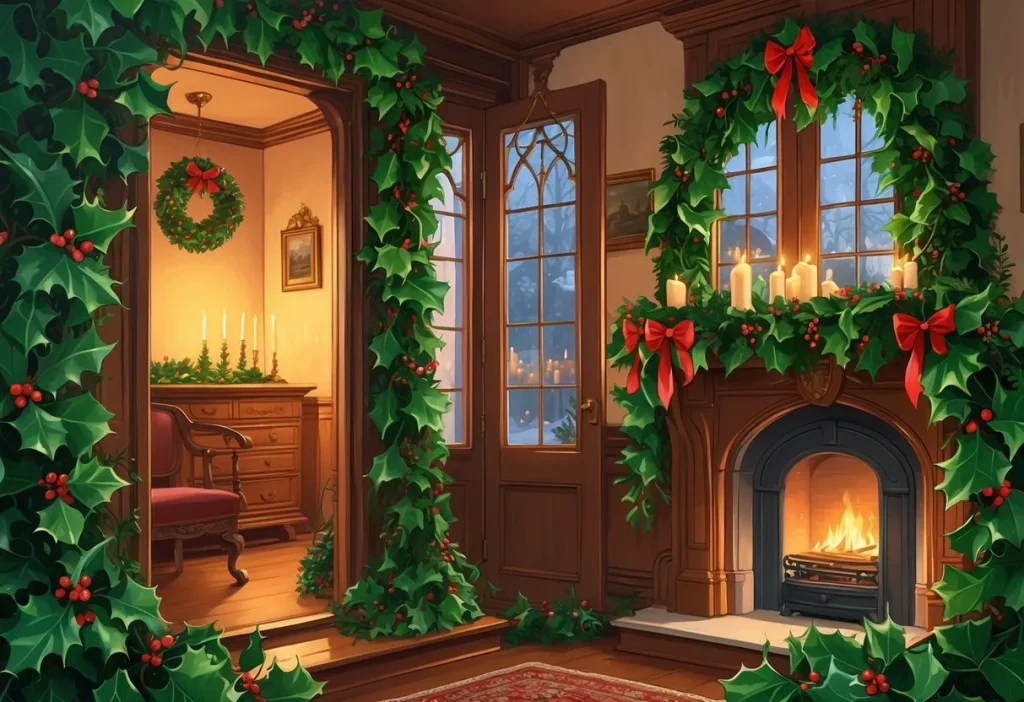
Victorian homes often used holly and ivy as key decorations during Christmas. Holly’s sharp leaves and red berries symbolized parts of Christ’s story, adding meaning to the decor. Ivy, with its bright green leaves, was popular for its color and style.
People draped holly and ivy over mantels, staircases, and mirrors. Sometimes they tied the plants with rope and added fir cones for extra detail. Both plants brought a natural and festive look to Victorian homes.
9) Lacing and steaming Christmas puddings
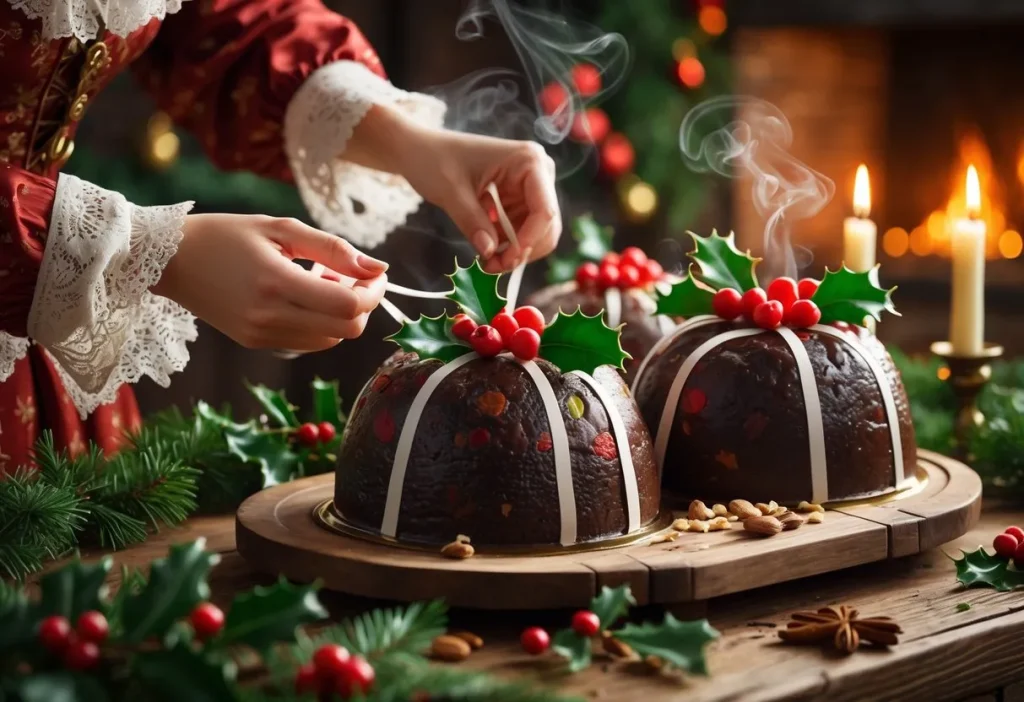
Victorian Christmas puddings were traditionally tied with a cloth or wrapped in greaseproof paper before steaming. The cloth was secured tightly to keep the pudding in shape during the long cooking process.
Steaming could take up to four hours to fully cook the pudding. The pudding basin was placed in boiling water, with the water level reaching halfway up the mold.
After cooking, the pudding was often stored in a cool place until Christmas Day. It was sometimes reheated by boiling or steaming again before serving.
10) Victorian era Christmas carols becoming widespread
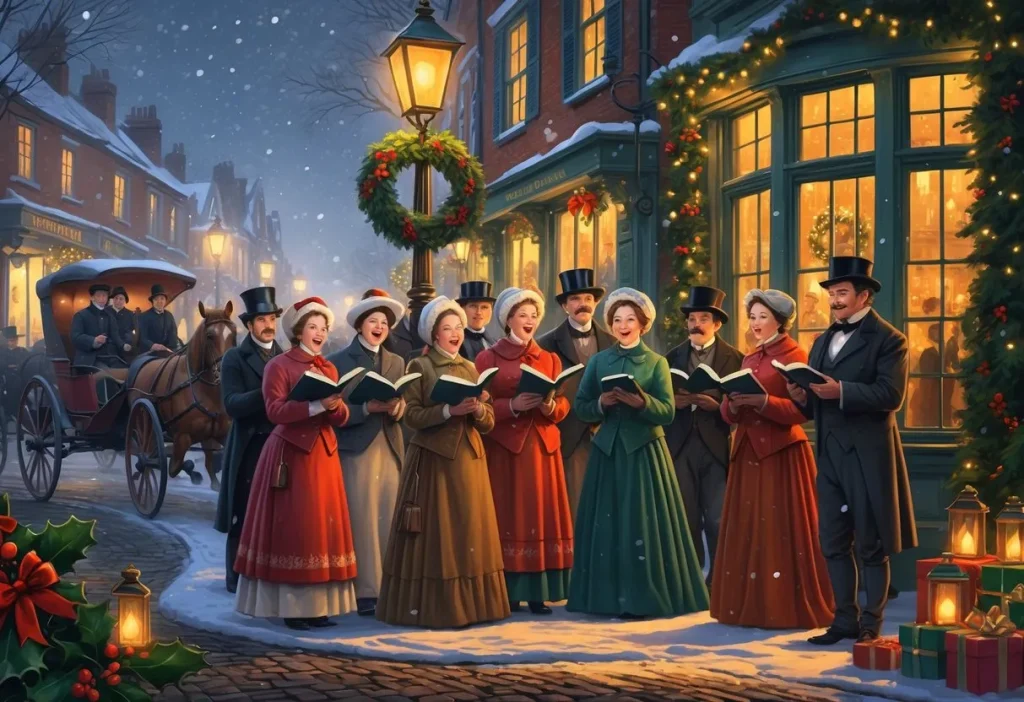
During the Victorian era, Christmas carols became much more popular. People enjoyed singing old medieval songs and new ones written during this time.
Caroling grew as a social activity. Families and groups of friends went door to door, sharing festive songs with neighbors.
This period helped shape Christmas music traditions still followed today. Many beloved carols first gained wide attention in Victorian England and America.
11) Mass production enabling Christmas gifts
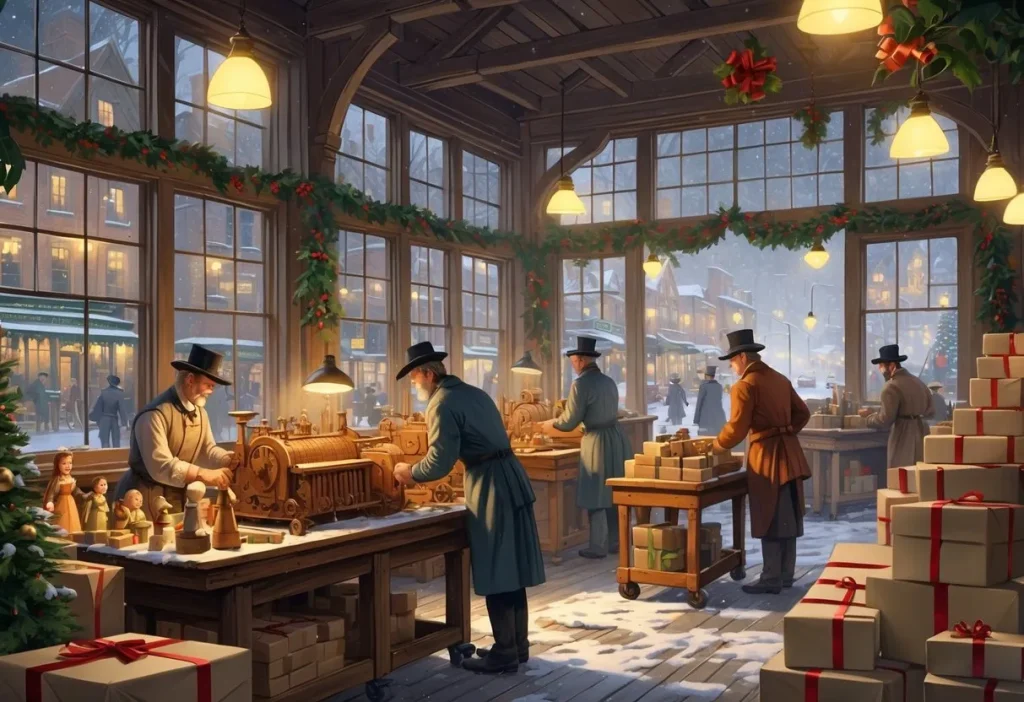
Mass production during the Victorian era made toys and gifts more affordable for many people. Factories produced items like dolls, books, and games that had once been expensive and handmade.
This shift allowed the growing middle class to buy gifts for Christmas, helping to create the tradition of holiday shopping. Simple gifts like fruits and nuts remained common for poorer families.
12) Use of mistletoe for festive decoration
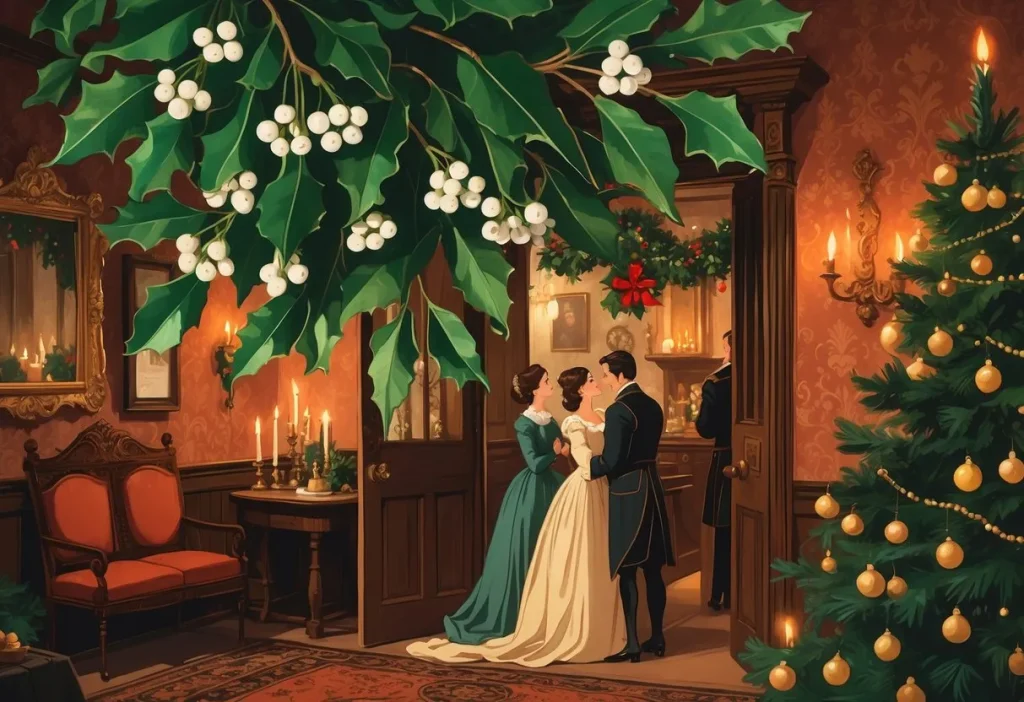
Victorians embraced mistletoe as a popular Christmas decoration. It was often placed in kissing boughs, which were circular arrangements hung from ceilings or doorways.
They believed mistletoe symbolized love and fertility. Kissing under the mistletoe became a common tradition during Victorian Christmas celebrations.
The plant’s green leaves and white berries added a natural festive touch. Mistletoe was both a decoration and a symbol of goodwill in the holiday home.
13) Victorian-style Christmas parties and gatherings
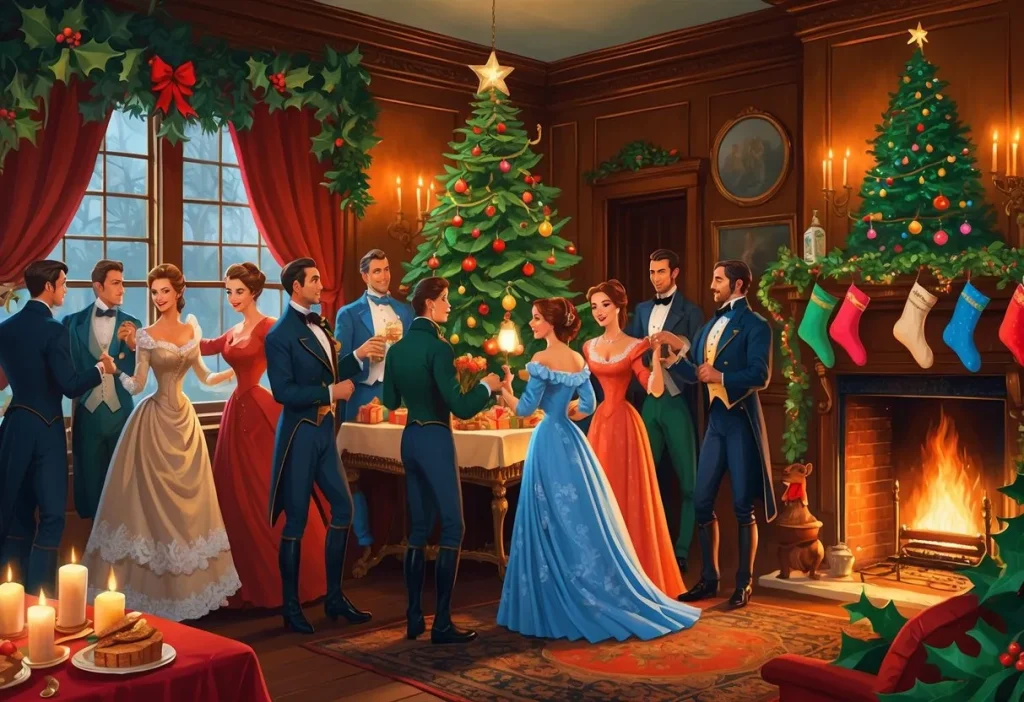
Victorian Christmas parties were important social events. Families and friends gathered to enjoy food, music, and decorations.
Victorians often held tea parties with vintage cups and festive treats. These gatherings included singing carols and exchanging small gifts.
Homes were decorated with natural items like holly and pine. Victorian parties helped create a warm, festive atmosphere that influenced modern Christmas celebrations.
14) Giving gifts as part of Christmas tradition
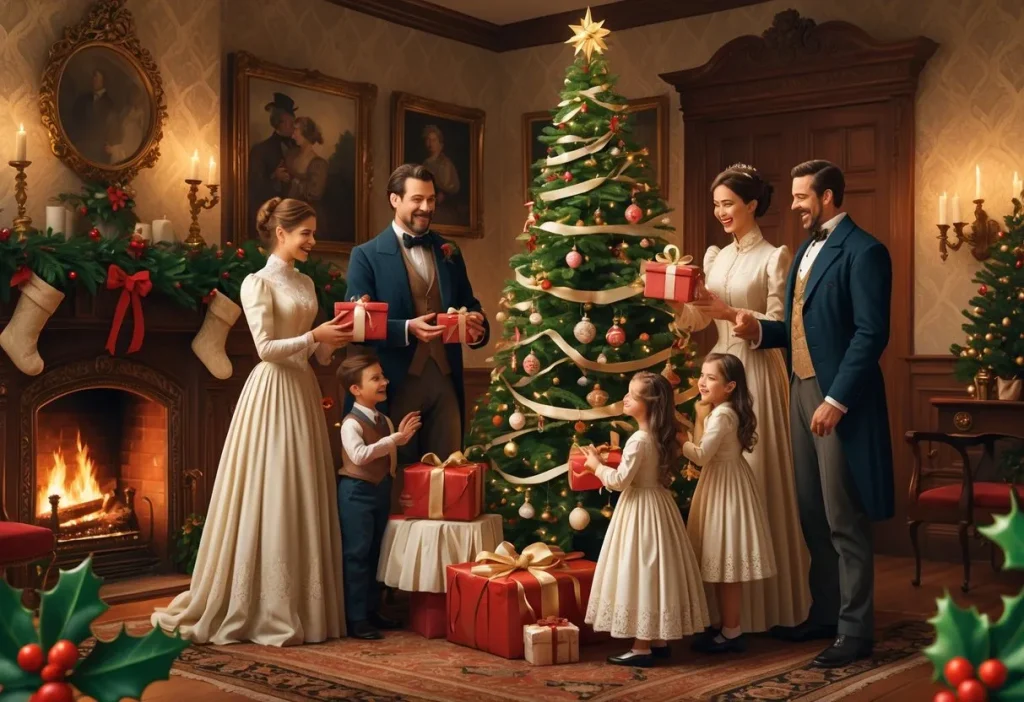
Victorians helped make gift-giving a key part of Christmas celebrations. At first, presents were simple, like fruit, nuts, or small handmade items. These gifts were often placed on the Christmas tree.
The tradition of giving gifts on Christmas Eve grew during this time. The Industrial Revolution also made shopping easier and more popular, especially for the new middle class.
Victorian gift-giving influenced how Christmas is celebrated today, with both adults and children looking forward to exchanging presents.
15) Roasted chestnuts as seasonal food
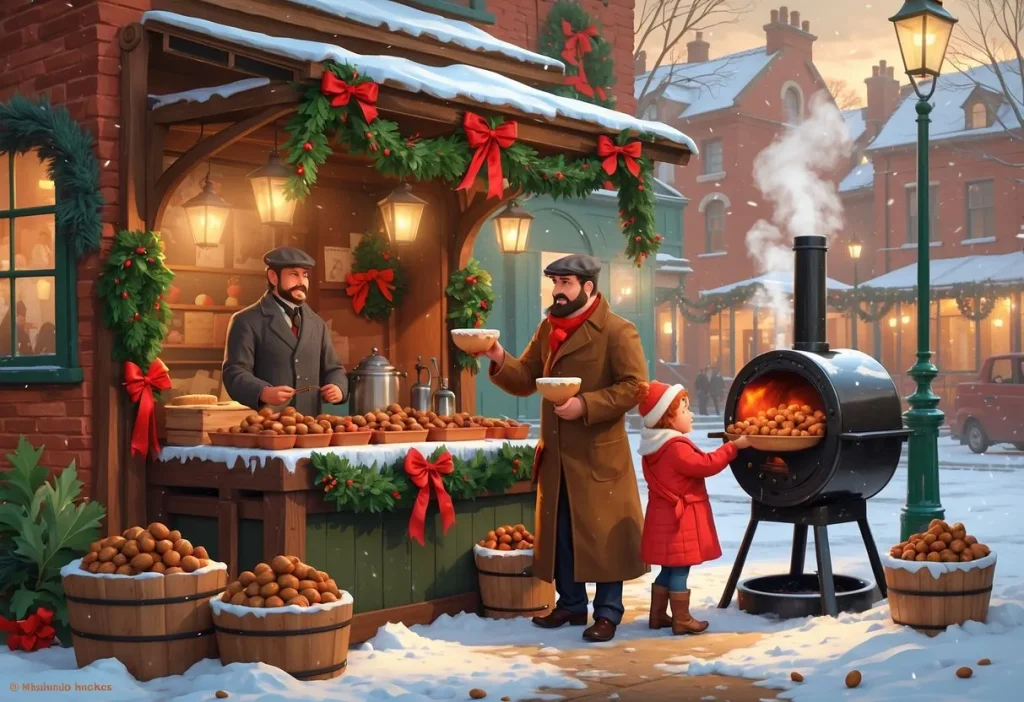
Roasted chestnuts were a popular seasonal treat during Victorian Christmas. They were often sold by street vendors, filling the cold air with a warm, nutty smell.
This simple food symbolized the arrival of Christmas and brought people together. Families would enjoy chestnuts roasted over open fires as part of their holiday traditions.
The practice reflects how Victorians valued seasonal and preserved foods during winter celebrations.
16) Celebrations at Windsor and Osborne royal homes
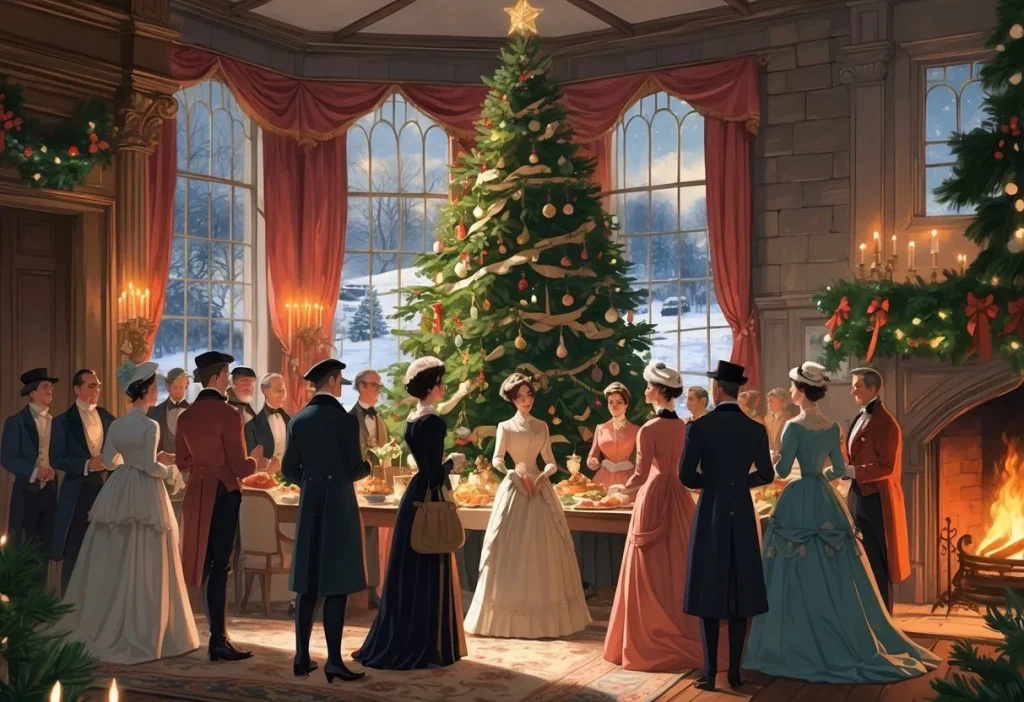
Queen Victoria and Prince Albert celebrated Christmas at Windsor Castle in their early years of marriage. They decorated tables with seasonal plants and small trees. Family gifts were arranged with care.
After Prince Albert died in 1861, Queen Victoria moved Christmas celebrations to Osborne House on the Isle of Wight. The holidays there were more private but still elegant. These traditions helped keep Albert’s memory alive.
17) Introduction of festive lights using gas lamps
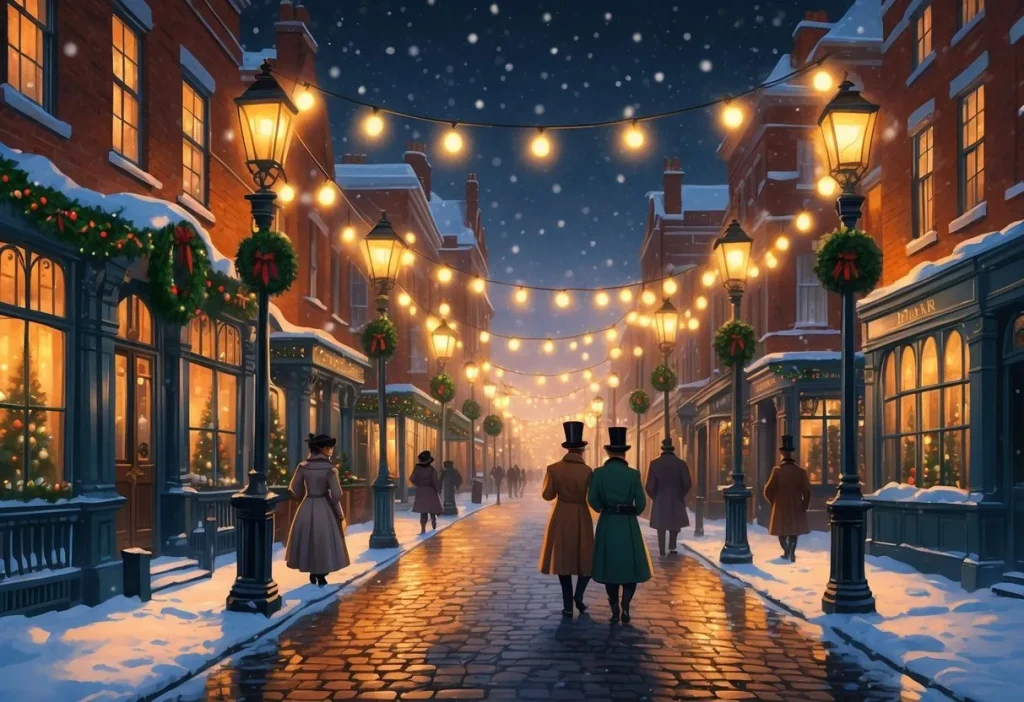
Gas lamps became popular in Victorian times for lighting streets and parks. They were also used during Christmas to create festive decorations.
These lamps often had colorful glass shades that added beauty and color to the holiday displays.
Gas lighting allowed for brighter and more reliable illumination compared to candles or oil lamps.
By the end of the Victorian era, gas lamps were common in homes and public places during celebrations.
18) Victorian Christmas markets and fairs
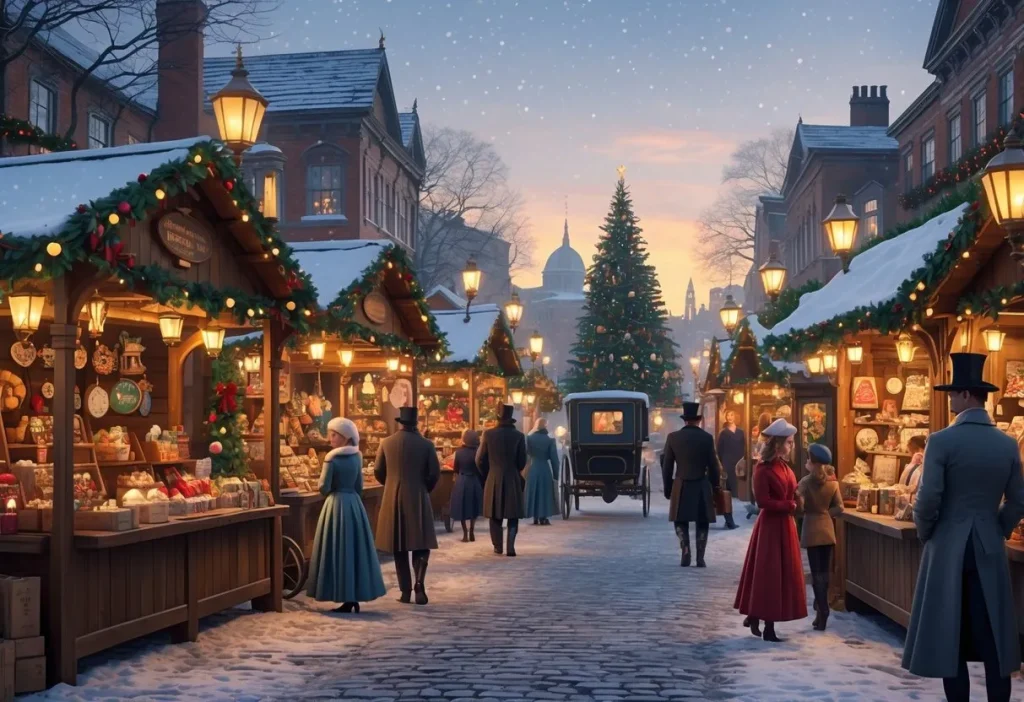
Victorian Christmas markets and fairs became popular gathering places during the holiday season. People of all classes visited to shop for gifts, enjoy food, and take part in festive activities.
These markets often featured handmade decorations, artisan goods, and seasonal treats. The atmosphere was lively, blending shopping with entertainment.
Today, many events still draw inspiration from these Victorian traditions, creating a nostalgic holiday experience.
19) Emphasis on social reform through charitable acts
Victorian Christmas placed strong importance on charity and helping the poor. This period saw an increase in acts of kindness as a way to address social problems caused by industrialization and poverty.
Charles Dickens’ A Christmas Carol highlighted the need for charity and social responsibility. His story encouraged giving and compassion, which influenced public attitudes toward the less fortunate.
Charitable acts during Christmas were seen as a way to promote social reform. People believed generosity could help improve society and reduce suffering during difficult times.
20) Father Christmas depicted as jolly and magical
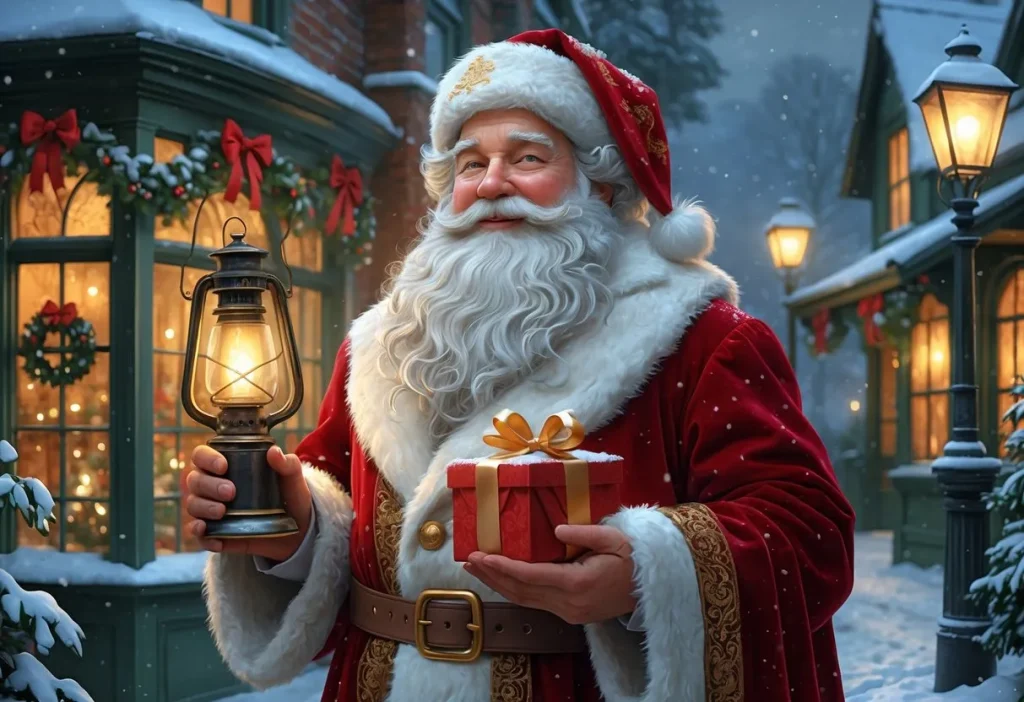
In Victorian times, Father Christmas began to be shown as a jolly, happy man. He wore bright red clothes and had a white beard.
People started to see him as a magical figure who brought gifts to children. This image grew popular through stories and poems.
He was no longer just a symbol of the season but a kind, generous person. This helped make Christmas more joyful and festive for families.
21) Use of festive ribbons and bows for decoration
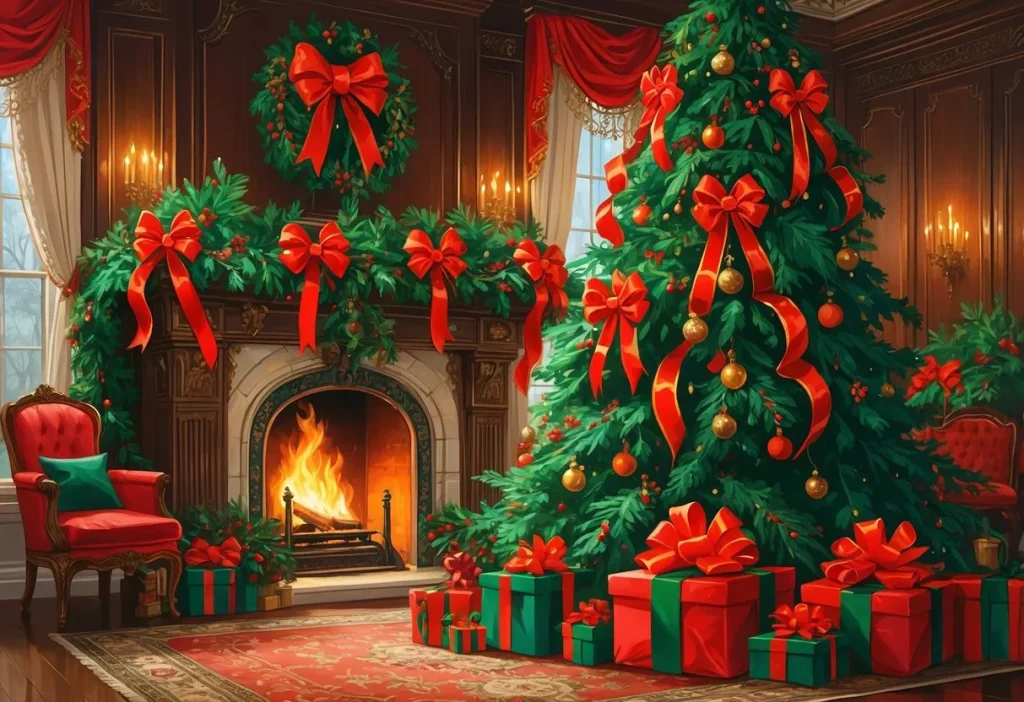
Victorians loved using ribbons and bows to decorate during Christmas. They used wide, rich ribbons made of velvet, silk, or satin in deep colors like burgundy and green.
These ribbons were tied into big, flowing bows that added elegance and texture. Bows decorated trees, garlands, and gifts, making every detail feel special.
This tradition helped create a warm and festive atmosphere, reflecting Victorian tastes for rich materials and careful craftsmanship.
22) Victorian Christmas theatre performances
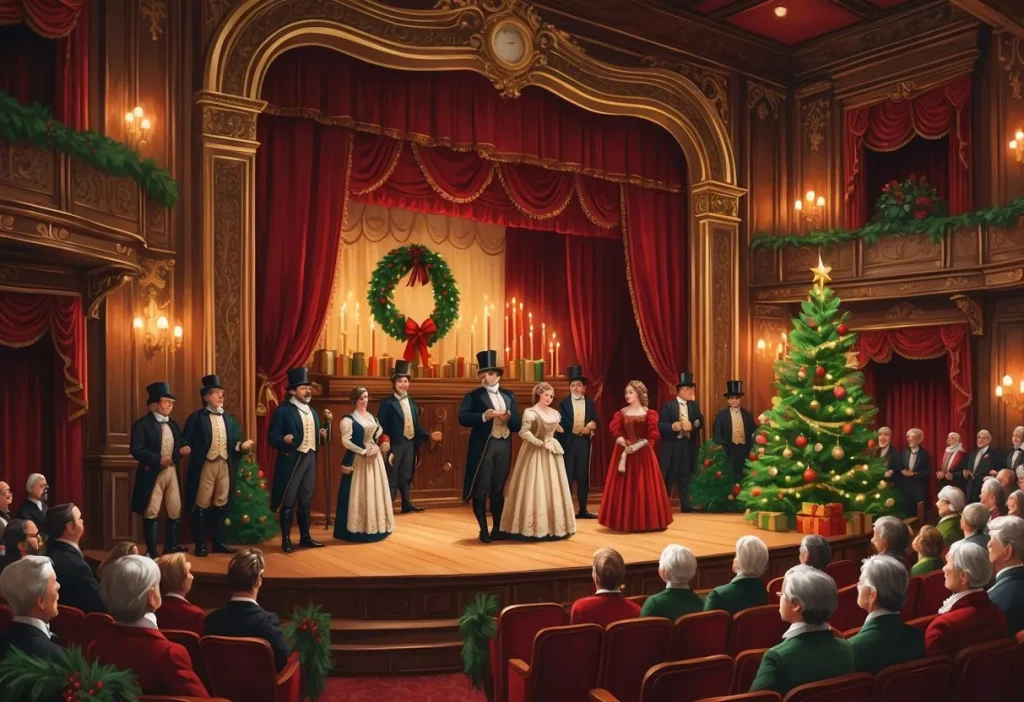
Victorian Christmas saw theatre become an important holiday tradition. The removal of restrictions by the Theatre Act of 1843 allowed more creativity and audience participation.
Pantomimes became popular, blending humor and music for festive entertainment.
Charles Dickens’ “A Christmas Carol” was often performed, bringing Victorian Christmas themes of generosity and redemption to life on stage.
23) Popularity of wreaths on doors
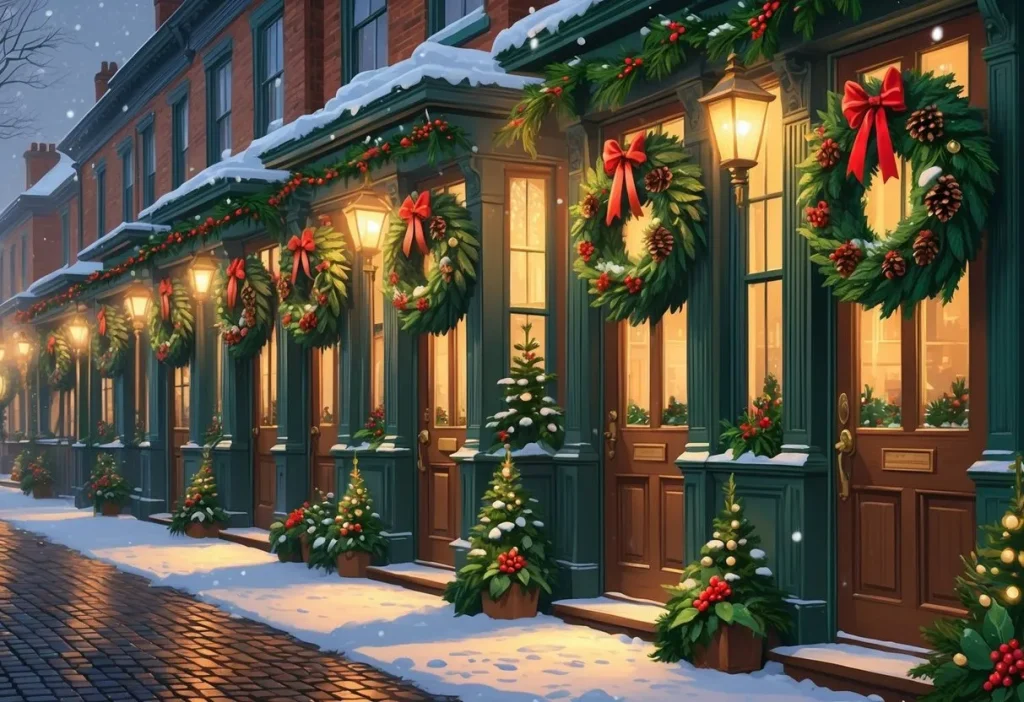
During the Victorian era, wreaths became a common decoration on front doors. They were made from evergreen branches, holly, and berries.
Victorians added ribbons and ornaments to make wreaths more festive and decorative. Wreaths symbolized welcome and holiday spirit for visitors.
This tradition grew as wreaths showed hospitality and a family’s social status during Christmas. The Victorian style influenced how wreaths are decorated even today.
24) The evolution of Christmas stockings

Christmas stockings became popular during the Victorian era. People began hanging large socks by the fireplace for Santa to fill with small gifts.
This tradition grew in part because of Victorian poems like “A Visit from St. Nicholas.” It helped shape the modern idea of stockings filled with toys and candy.
Victorian England made this practice common in many homes. Over time, stockings have changed in size and design to hold more gifts.
25) Making and sending handwritten Christmas letters

Victorians often sent handwritten Christmas letters to share holiday greetings with family and friends. Writing letters was a common way to stay connected before phones existed.
The introduction of the penny post in 1840 made sending letters cheaper and easier. This helped more people send Christmas messages by mail.
Letters were seen as personal and meaningful. They showed care and helped maintain relationships during the holiday season.