
Spacious Living Room Ideas for Modern and Functional Interiors
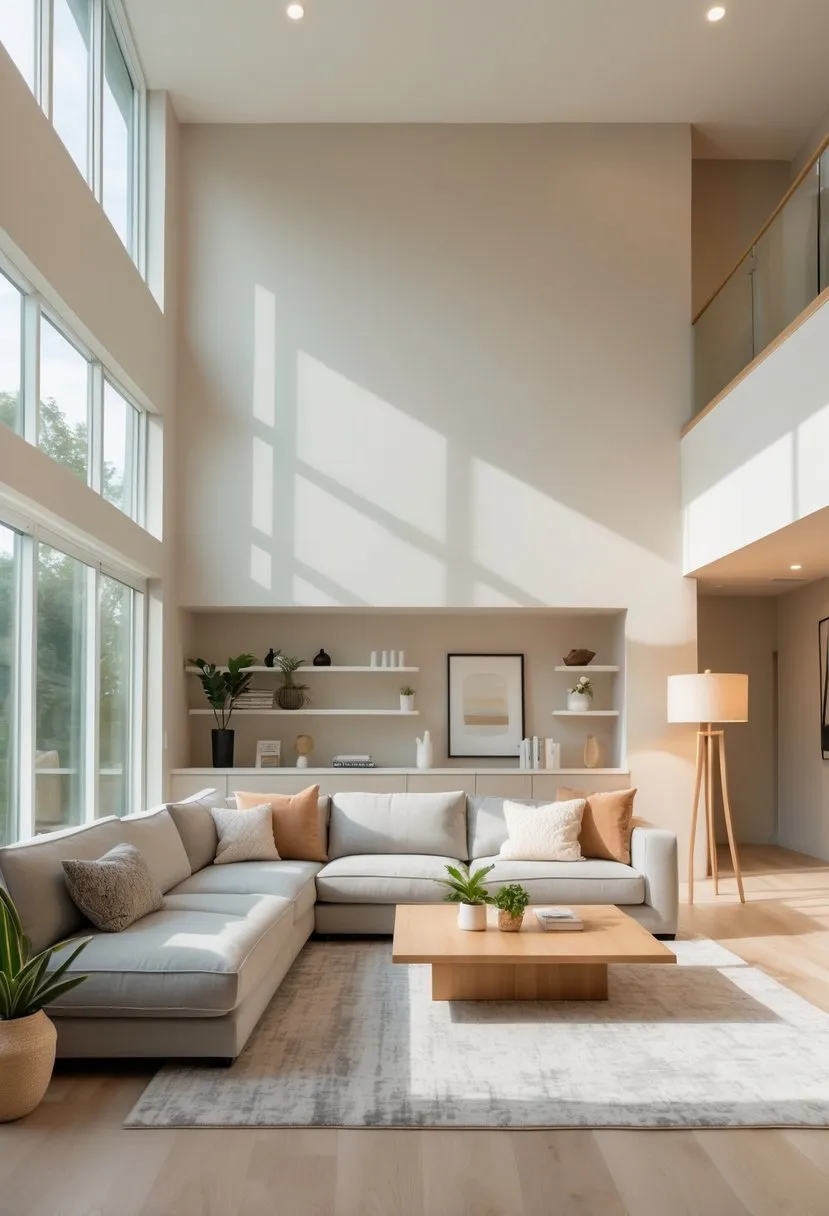
A spacious living room offers many chances to create a comfortable and stylish area. It can host gatherings, provide a quiet retreat, or serve as a place for everyday family life. Understanding how to use the space well can make it both practical and inviting.
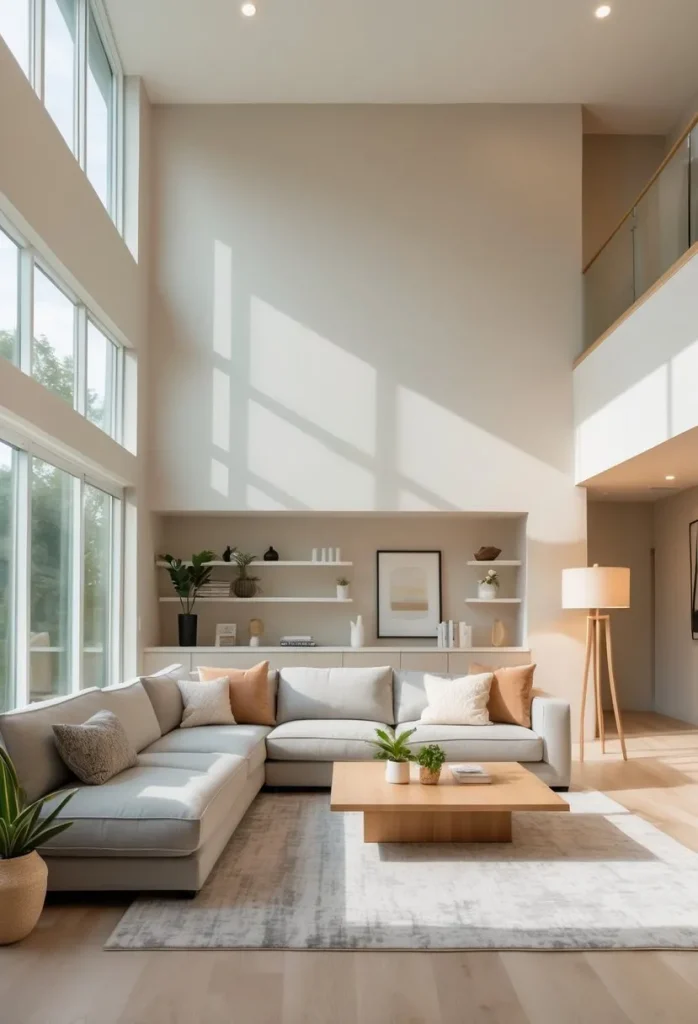
Spacious living room ideas focus on making large areas feel cozy, balanced, and functional without wasting space. These ideas help people turn their big living rooms into places that suit their lifestyle and taste while making the most of the room’s size.
1) Create multiple seating zones with sofas, chairs, and ottomans
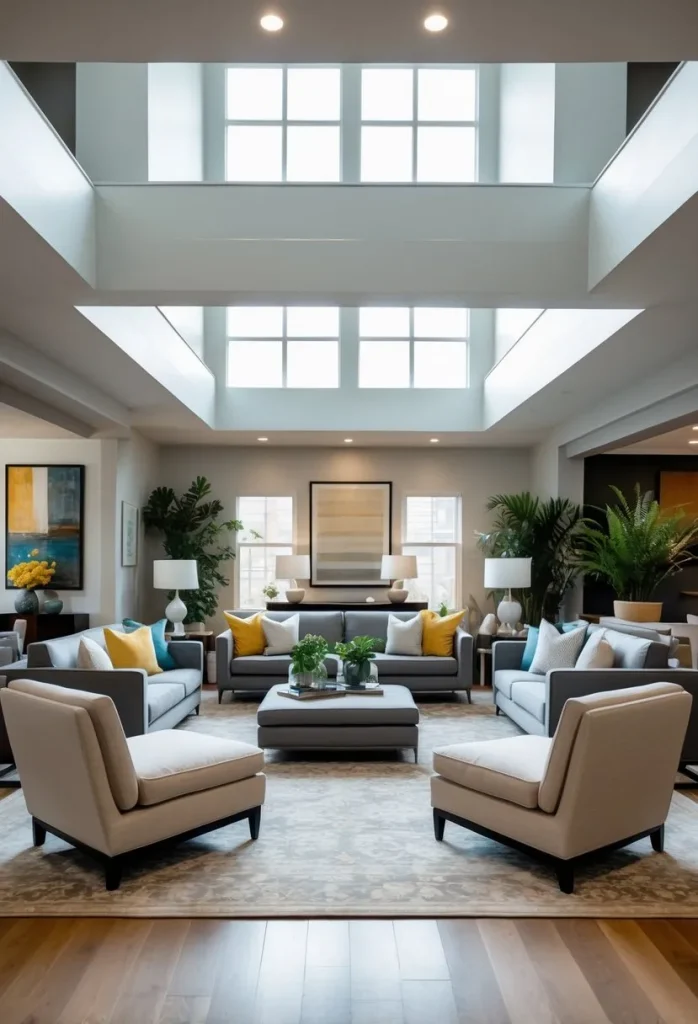
Creating multiple seating zones helps make a living room feel spacious and organized. Using sofas, chairs, and ottomans, one can define separate areas for conversation, relaxation, or entertainment.
Different types of seating add variety and comfort. Ottomans can serve as extra seats or footrests, while chairs offer flexible arrangements. This approach works well in both large and small rooms by breaking the space into functional parts.
2) Incorporate large area rugs to define spaces
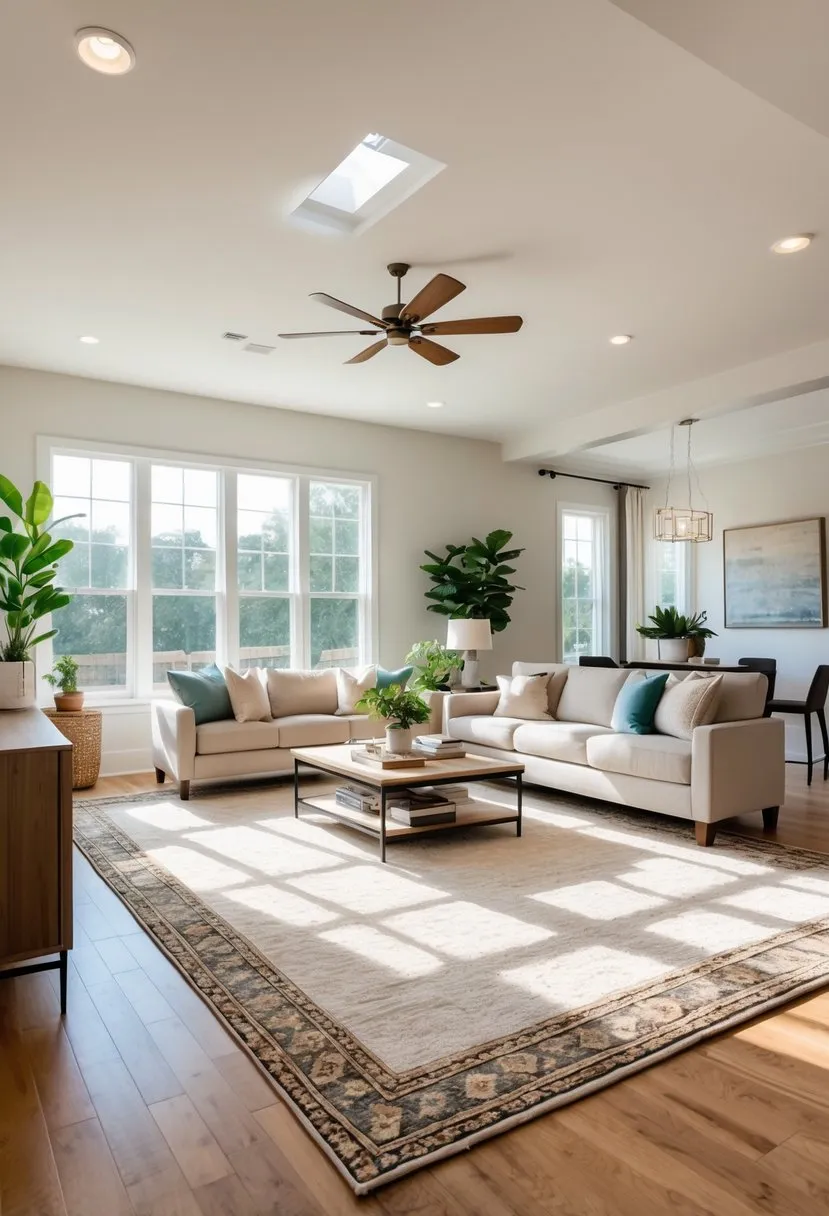
Large area rugs help separate different zones in a spacious living room. They create clear boundaries for seating or dining areas without needing walls.
Rugs should be big enough to fit furniture partially on them. This ties pieces together and makes the space feel connected.
Choosing rugs with colors or patterns that match the room adds style and warmth. Layering rugs can also bring texture and interest to the design.
3) Use modular furniture for flexible layouts
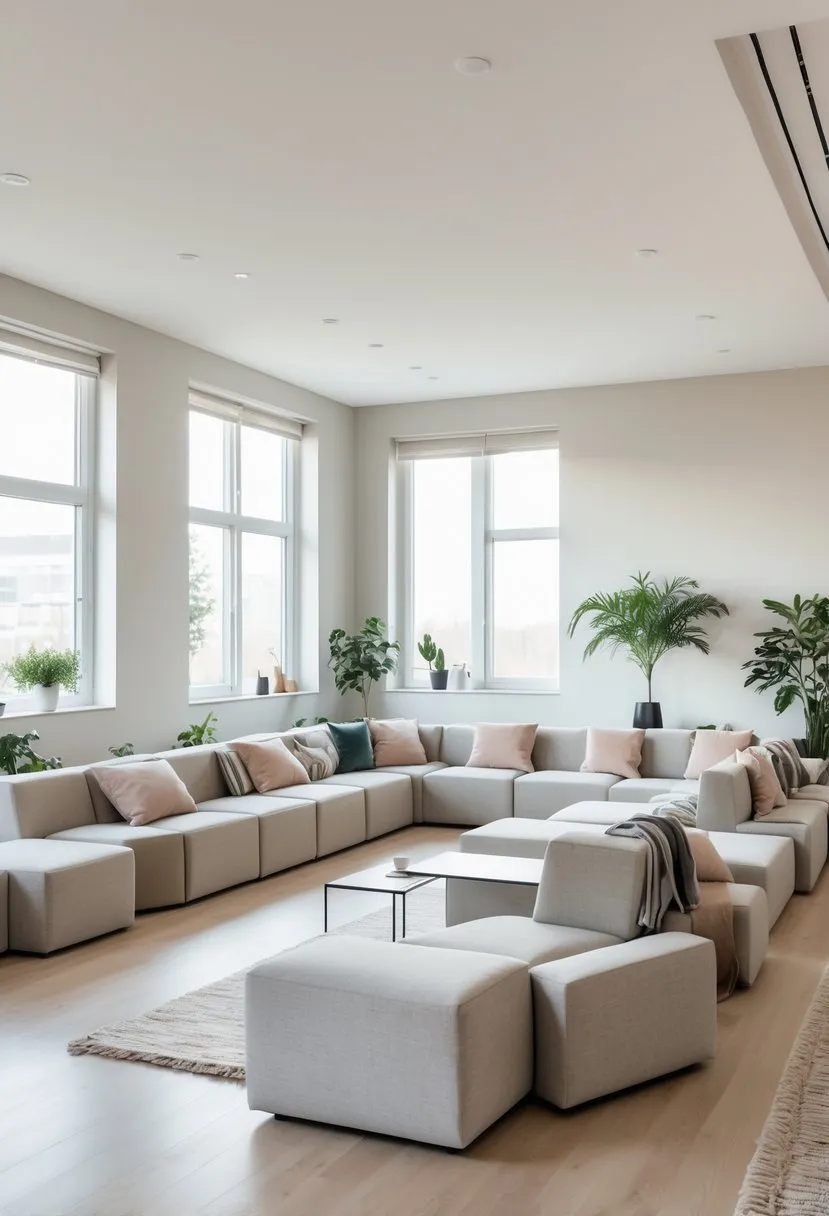
Modular furniture allows for easy changes in the living room layout. Pieces can be moved or combined to fit different needs, such as entertaining guests or relaxing alone.
This type of furniture often includes storage to keep the room uncluttered. It helps make the most of the available space while keeping the area open and adaptable.
With modular designs, the living room can shift from a cozy spot to a spacious area quickly. This flexibility suits modern lifestyles and varying daily activities.
4) Add built-in shelving for storage and display
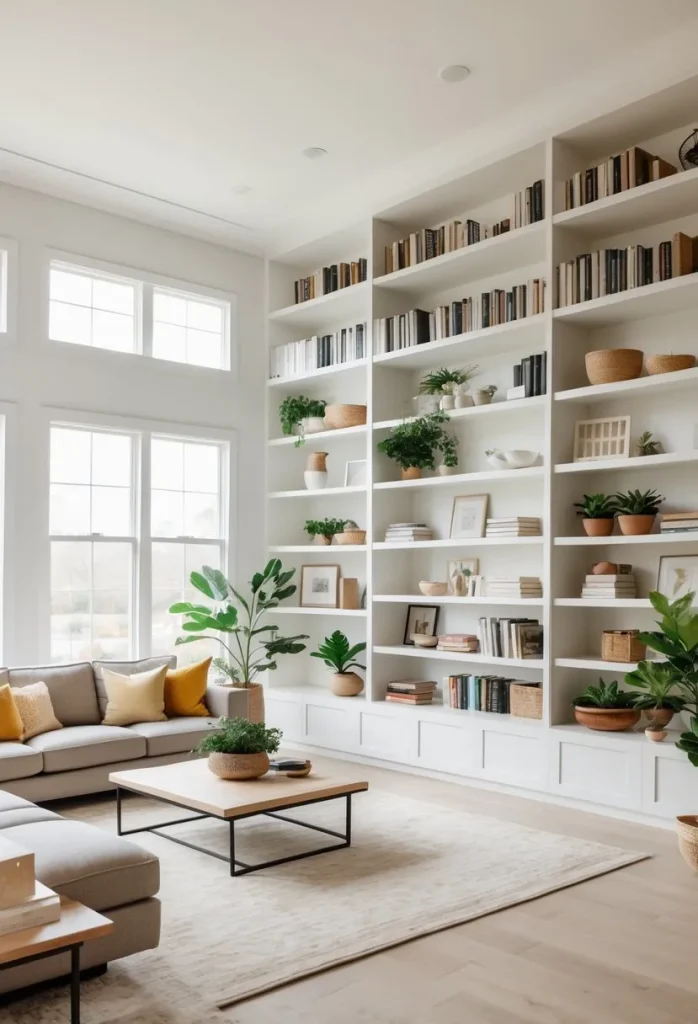
Built-in shelving creates smart storage while keeping the living room organized. It can blend seamlessly into walls, making the space feel open and tidy.
Shelves can hold books, decor, and media devices. Closed cabinets hide clutter, while open shelves show off favorite items. This mix offers both function and style.
Built-ins also add character to the room. They work well with many design styles and can be customized to fit any space.
5) Introduce warm lighting with layered fixtures
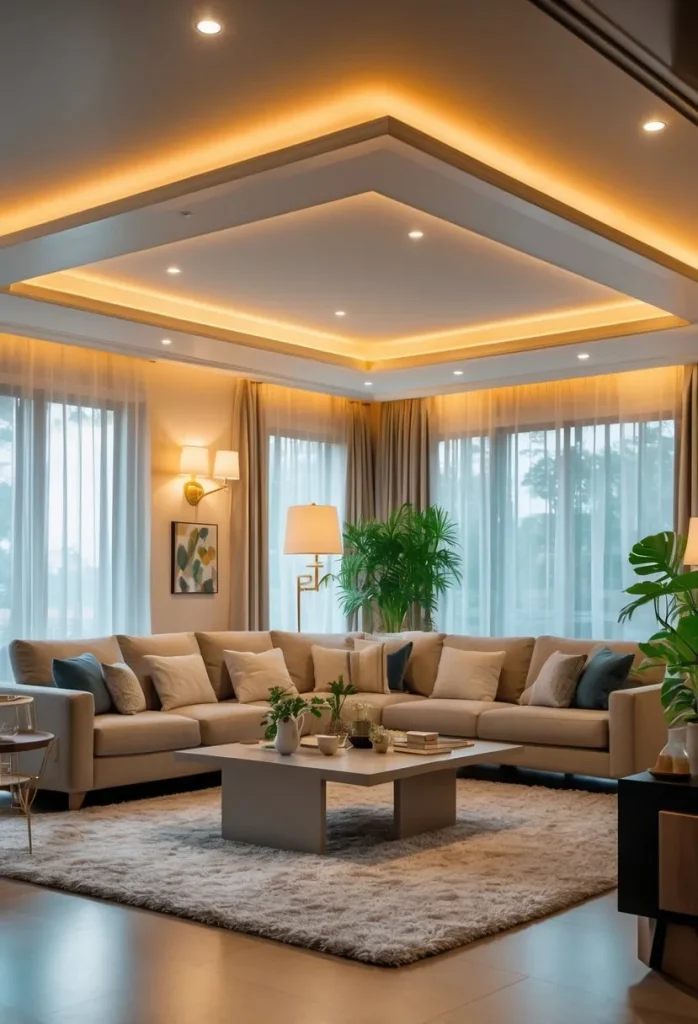
Layered lighting adds depth and warmth to a spacious living room. Combining ambient, task, and accent lights helps create a balanced environment.
Ceiling lights offer overall illumination, while floor and table lamps add softer, focused light. Accent lights highlight artwork or architectural features.
Using warm bulbs enhances comfort, making the space feel inviting without overpowering. Proper placement of different fixtures allows flexibility in how the room is lit throughout the day.
6) Choose a statement chandelier or pendant light
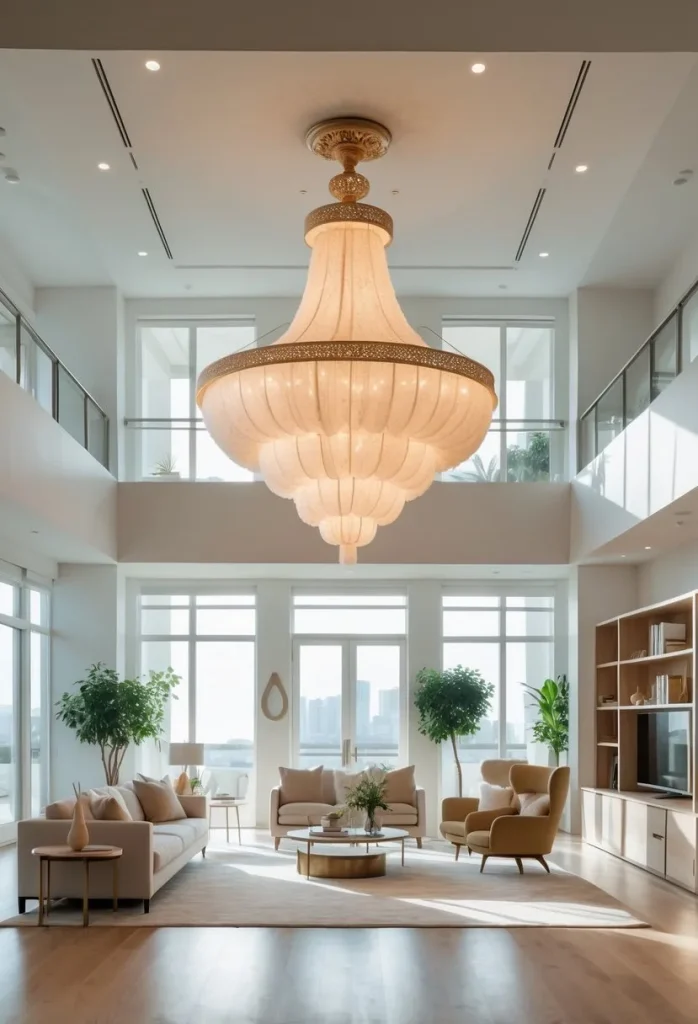
A statement chandelier or pendant light can raise the look of a spacious living room. It adds a clear focal point that draws attention and helps define the area.
The right size and style should match the room’s decor and scale. For large rooms, a grand chandelier works well, while smaller spaces benefit from sleek, modern pendants.
Lighting also affects the room’s mood. A well-placed chandelier can brighten the room and make it feel more open and inviting without cluttering the space.
7) Incorporate natural elements like plants and wood accents
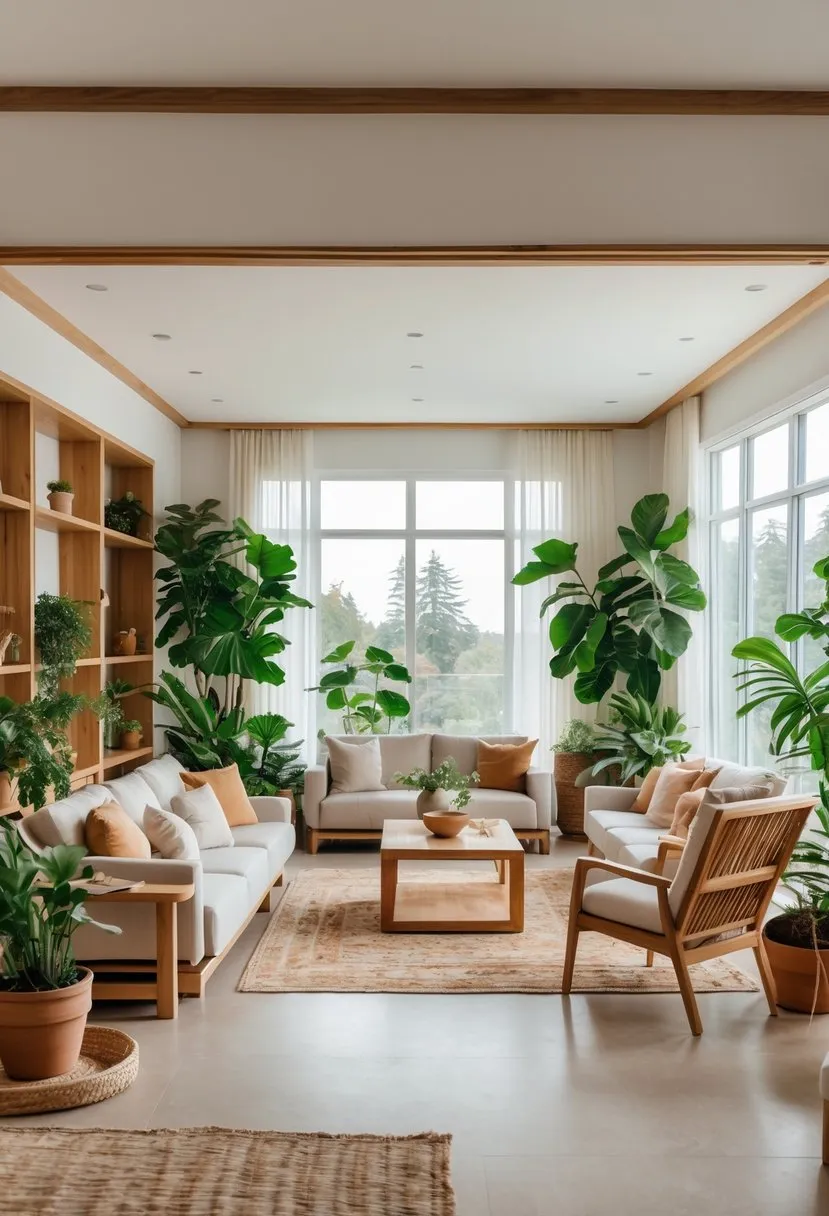
Adding plants to a living room brings a fresh and calming feel. They improve air quality and add a pop of green, making the space feel more open.
Wood accents, such as furniture or decorative pieces, add warmth and texture. These natural materials create a balanced, inviting atmosphere without cluttering the room.
Together, plants and wood help make a living room feel connected to nature. This keeps the space peaceful and visually spacious.
8) Use low-profile furniture to enhance openness
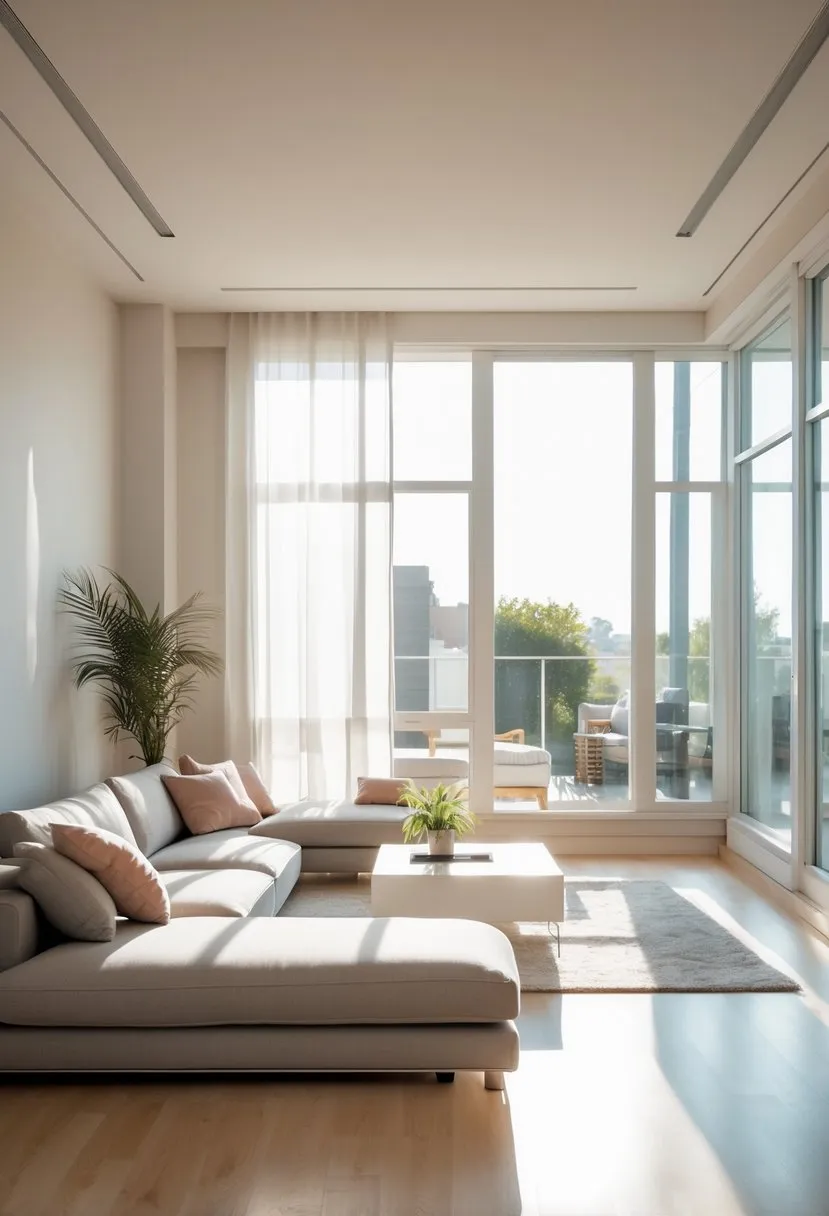
Low-profile furniture helps make a living room feel more open and spacious. Pieces like low sofas and coffee tables keep sightlines clear, preventing the space from feeling crowded.
This type of furniture also makes ceilings seem higher by staying close to the floor. It fits well with minimalist styles and open floor plans, supporting a clean and uncluttered look.
Choosing slim, low-slung pieces allows for better flow across the room. It creates a balanced space that feels both functional and airy.
9) Arrange furniture around a central focal point
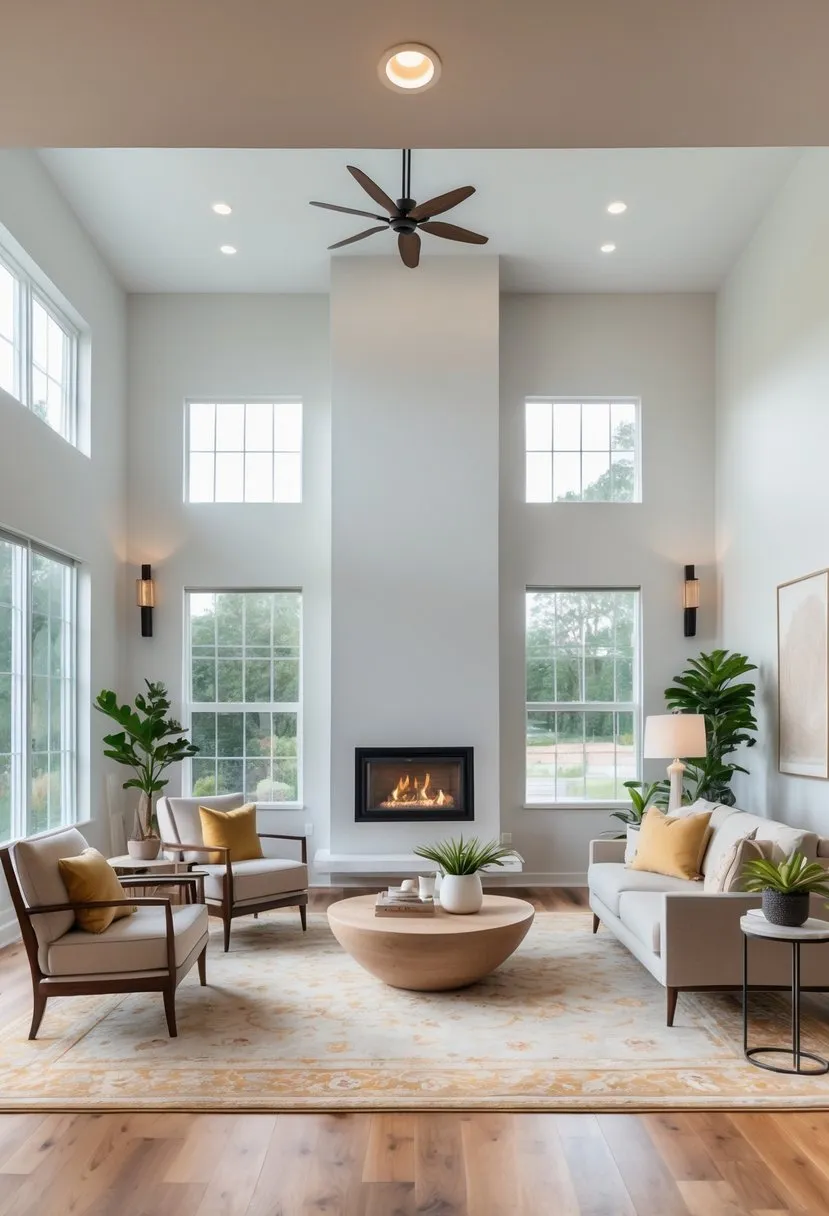
Arranging furniture around a clear focal point helps organize the space and makes the room feel balanced. It can be a fireplace, a large window, or a media center.
Placing the sofa and chairs facing or around this feature creates a natural flow for conversation and relaxation. A central coffee table often anchors the setup and adds function.
This method uses the room’s best feature to guide layout choices, helping improve both style and comfort in a spacious living room.
10) Mix textures for visual interest and comfort
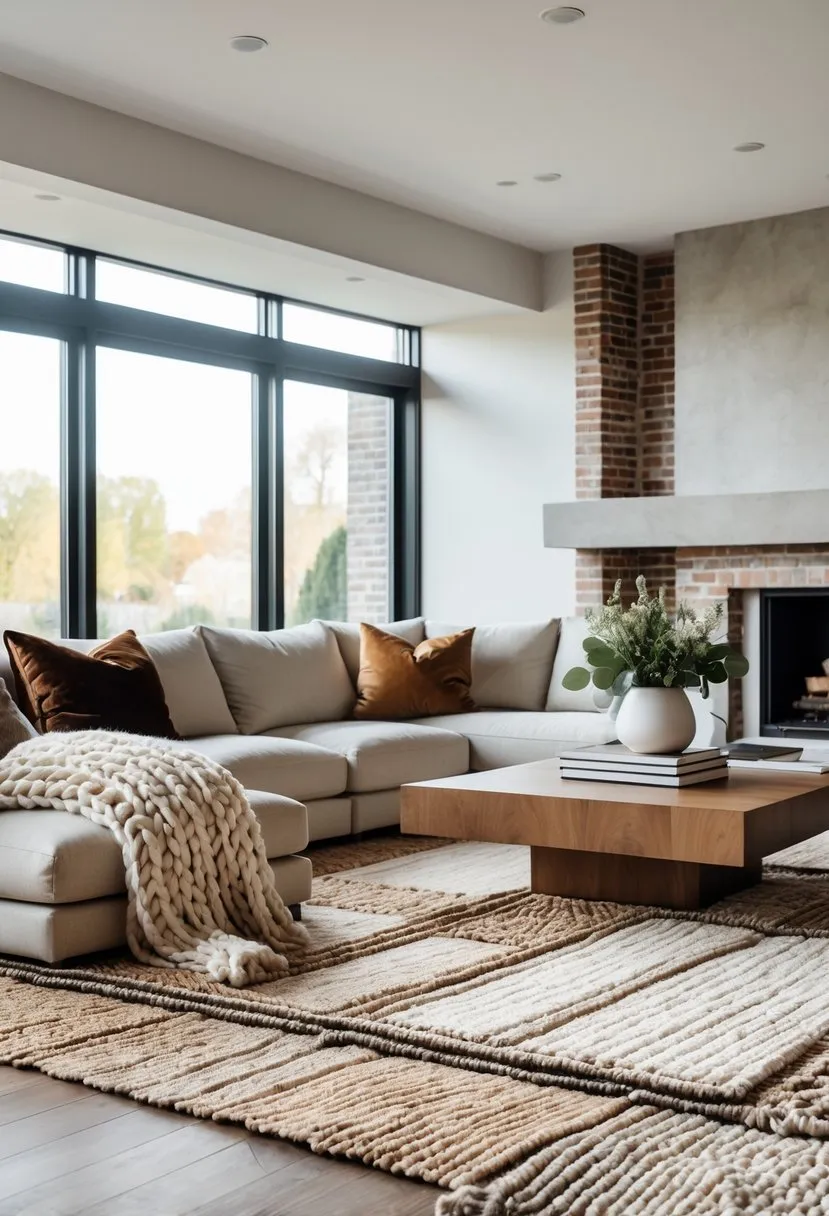
Mixing textures adds depth and makes a living room feel more inviting. Combining smooth fabrics with rough wood or soft knits creates a balanced look. It helps break up flat surfaces and draws attention to key pieces.
Using different materials also brings comfort. For example, a leather sofa paired with a wool pillow offers both visual and tactile contrast. This simple layering can transform a spacious room into a warm, stylish area without clutter.
11) Create a cozy nook with a chaise lounge or daybed
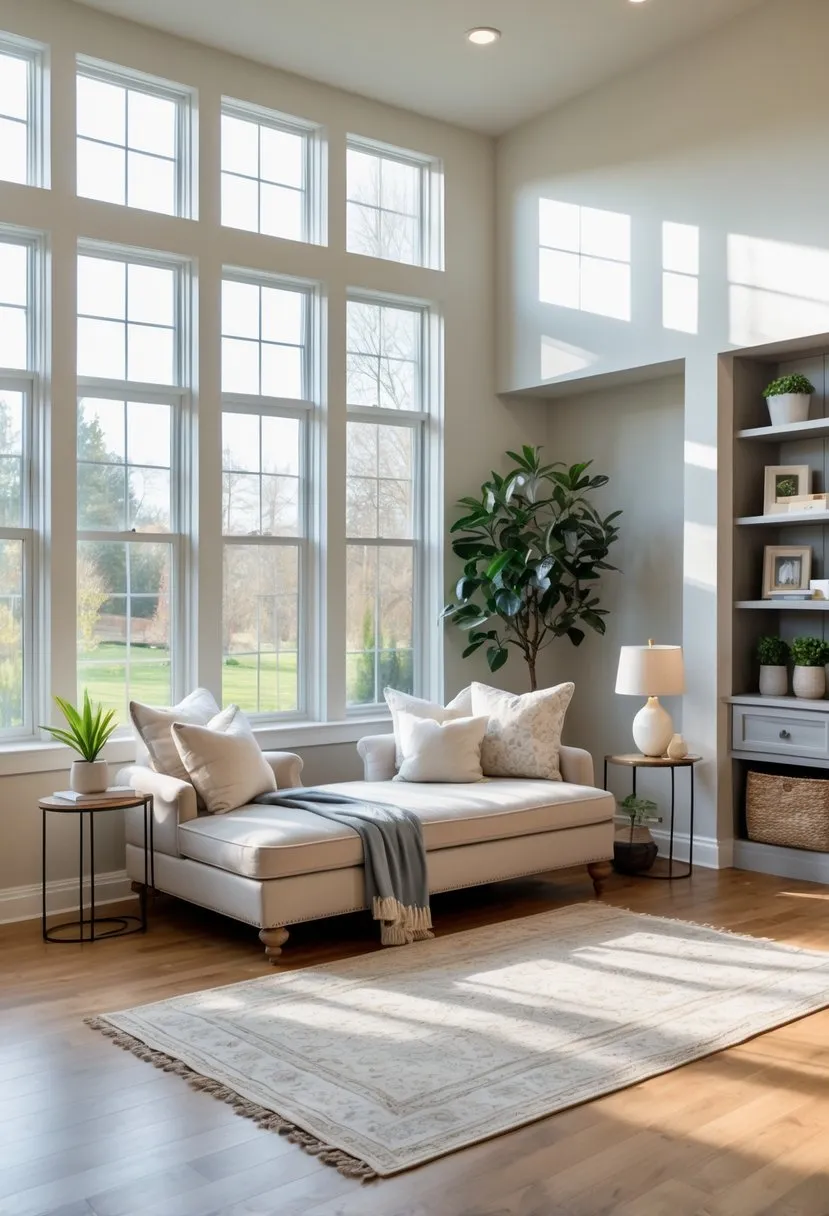
A chaise lounge or daybed can turn an empty corner into a comfortable retreat. It adds a place to relax without taking up too much room.
These pieces offer both style and function. They work well for reading, lounging, or even sleeping when needed.
Adding a small side table or lamp nearby enhances the space. This makes the nook practical and inviting, perfect for quiet moments.
12) Use neutral color palettes with bold accent pieces

A neutral color palette creates a calm and spacious feel in a living room. Shades like white, beige, gray, and soft browns work well as a base.
Adding bold accent pieces brings life to the space without overwhelming it. Bright cushions, colorful rugs, or a vibrant chair can create interest.
This balance keeps the room feeling open yet dynamic. It allows flexibility to change decor with seasons or trends while maintaining a clean look.
13) Add oversized art for dramatic effect
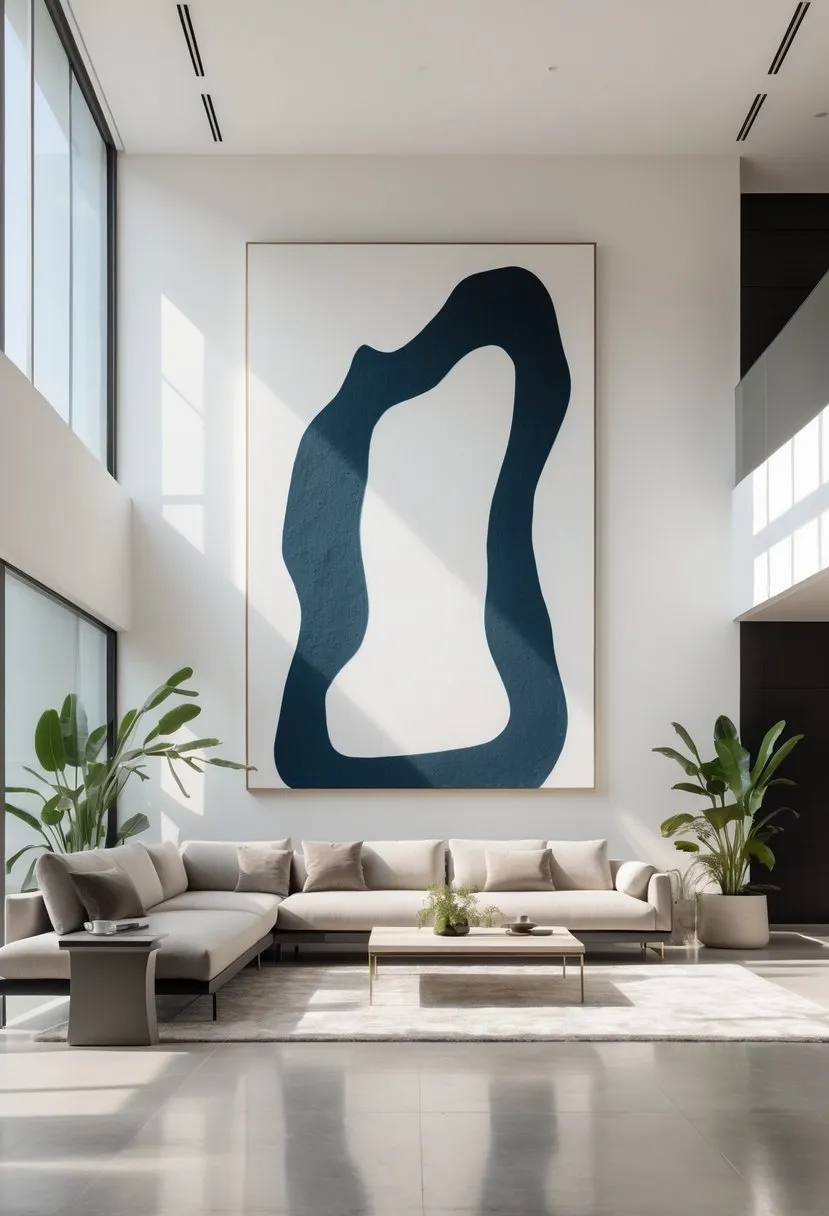
Oversized art can create a strong focal point in a spacious living room. It fills large wall space without clutter, balancing the room’s openness.
Choosing a piece that matches the room’s colors and style helps keep the look cohesive. Large paintings or photographs can add personality and interest.
This approach works especially well in rooms with high ceilings or wide walls. The right artwork enhances the space, making it feel intentional and well-designed.
14) Include a large coffee table for gathering
A large coffee table serves as a natural gathering spot in a spacious living room. It provides ample surface area for drinks, snacks, and decorative items without crowding the space.
The size and design of the table can anchor the seating arrangement. Choosing a style that matches the room’s decor helps create a balanced, inviting area.
Oversized tables often make the space feel organized. They define the conversation zone while offering both function and style.
15) Opt for floor-to-ceiling curtains to emphasize height
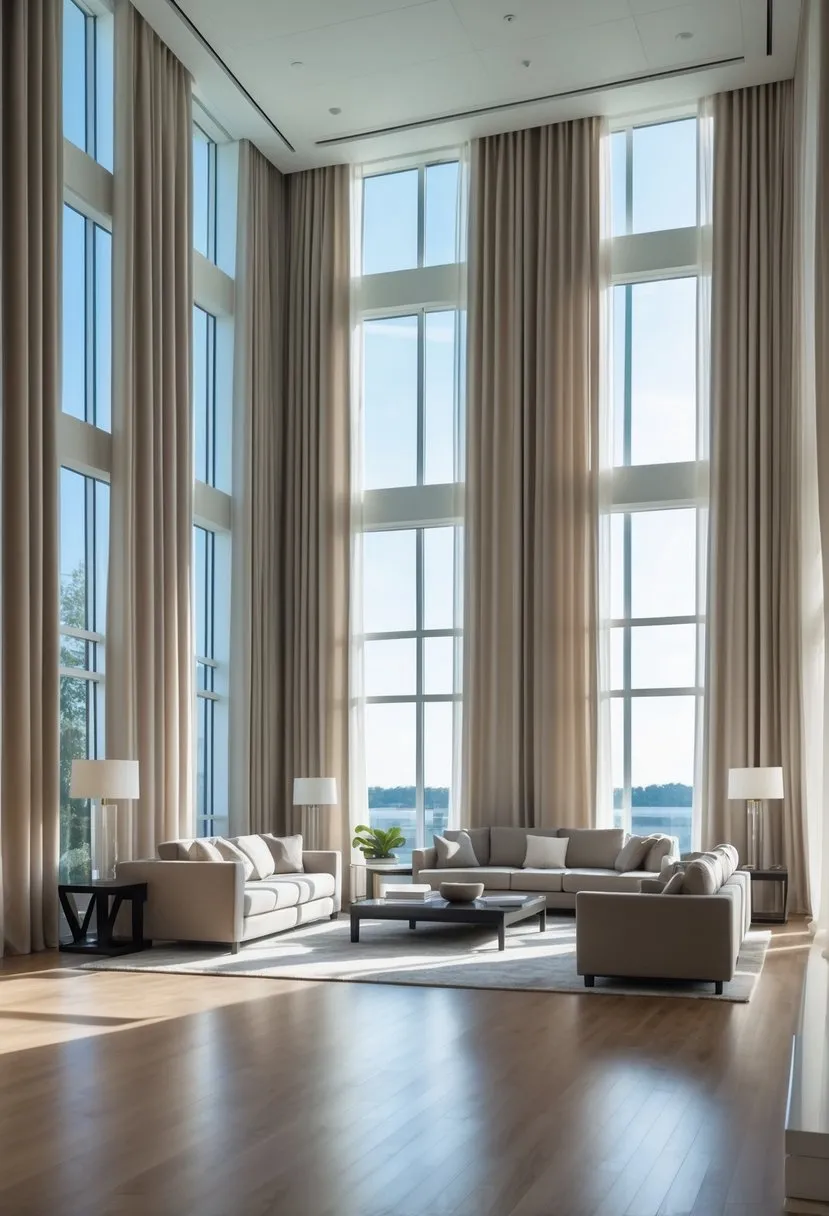
Floor-to-ceiling curtains draw the eye upward, making walls appear taller. This simple change adds a sense of height without altering the room’s structure.
Placing the curtain rod close to the ceiling creates a continuous vertical line from the floor upward. This technique works well in rooms with lower or average ceilings.
Choosing light or neutral colors can keep the space feeling open and bright. Thick, heavy fabrics like velvet add elegance but may reduce natural light.